Commercial Concrete Resurfacing | Gold Coast
A worn concrete surface does not automatically need to be demolished. In the right conditions, a polymer-modified concrete overlay can renew a commercial pathway, plaza, entry, strata common area or high-use pedestrian surface while retaining the existing slab underneath. The important words are in the right conditions.
Commercial resurfacing should never begin with a colour chart. It should begin with the concrete underneath it.
For facility managers, builders, body corporate committees, schools, commercial property owners and public-space operators, the real decision is not simply whether resurfacing looks better or costs less than replacement. The question is whether the existing slab is structurally suitable to remain in service and provide a stable base for the new system.
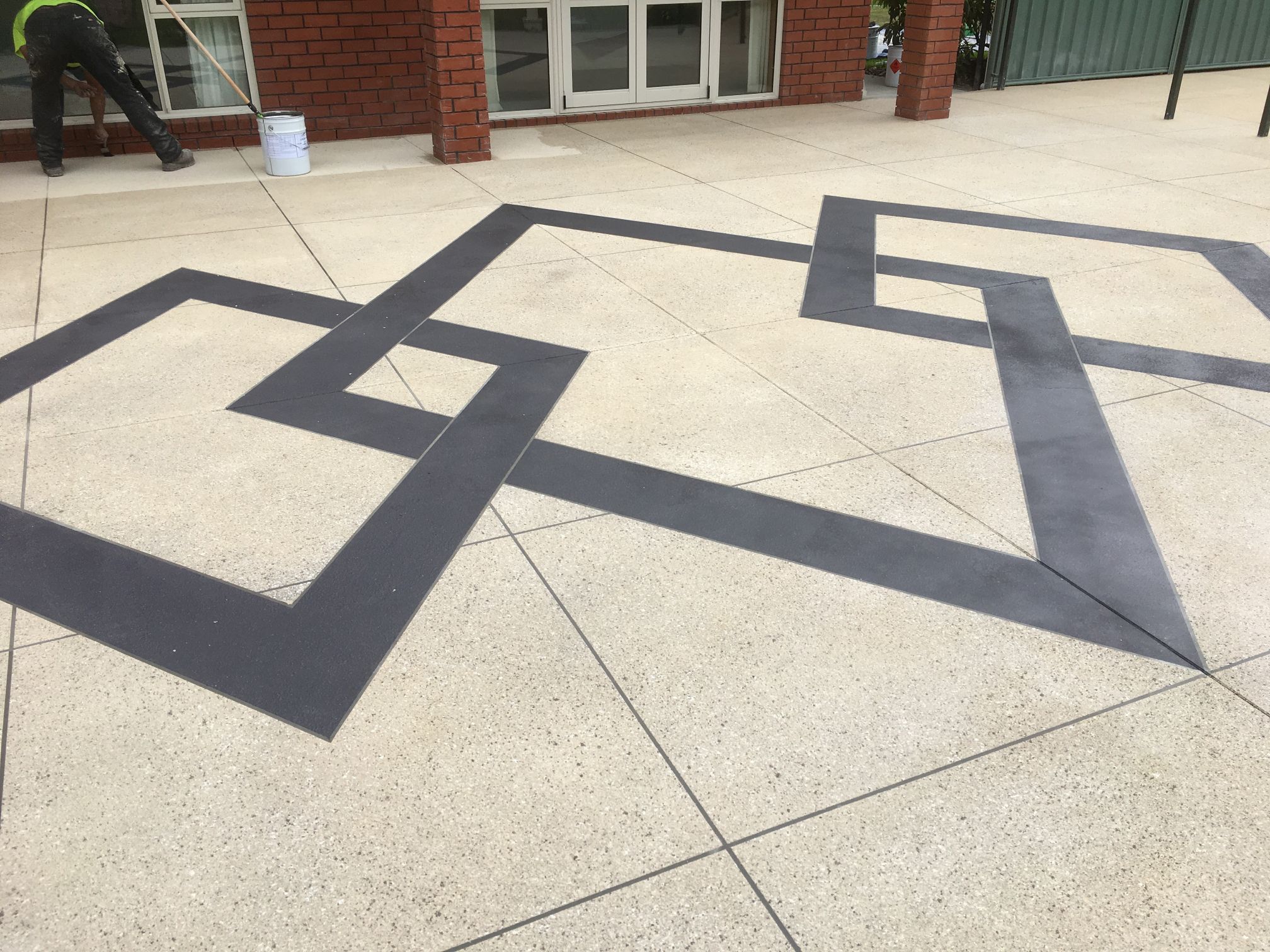
Commercial and high-traffic concrete needs to be assessed as a complete system, including the existing slab, joints, drainage, loading, surface preparation and intended use.
The short answer
A concrete overlay is generally worth considering when the existing slab is stable and serviceable, but the surface has become worn, weathered, discoloured, inconsistent, slippery or visually outdated. Resurfacing becomes a poor choice when the concrete is actively moving, sinking, badly cracked, suffering base failure or affected by unresolved drainage problems.
OSM Concrete has been working with concrete resurfacing and repair systems on the Gold Coast for more than two decades, including commercial, strata, council-facing, theme park and public-space environments.
That experience has reinforced one of the most important lessons in resurfacing: the quality of the finished overlay can never compensate for the wrong substrate underneath it.
What Is a Commercial Concrete Overlay?
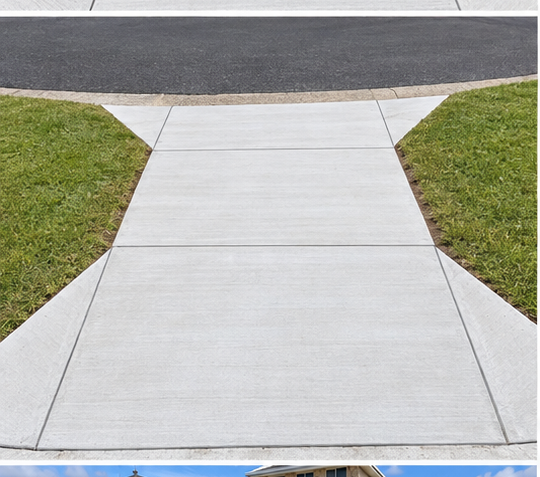
A concrete resurfacing overlay is a separate cementitious system bonded to an existing concrete substrate. Modern systems commonly combine high-strength cement, graded sands and polymer components to improve adhesion and performance.
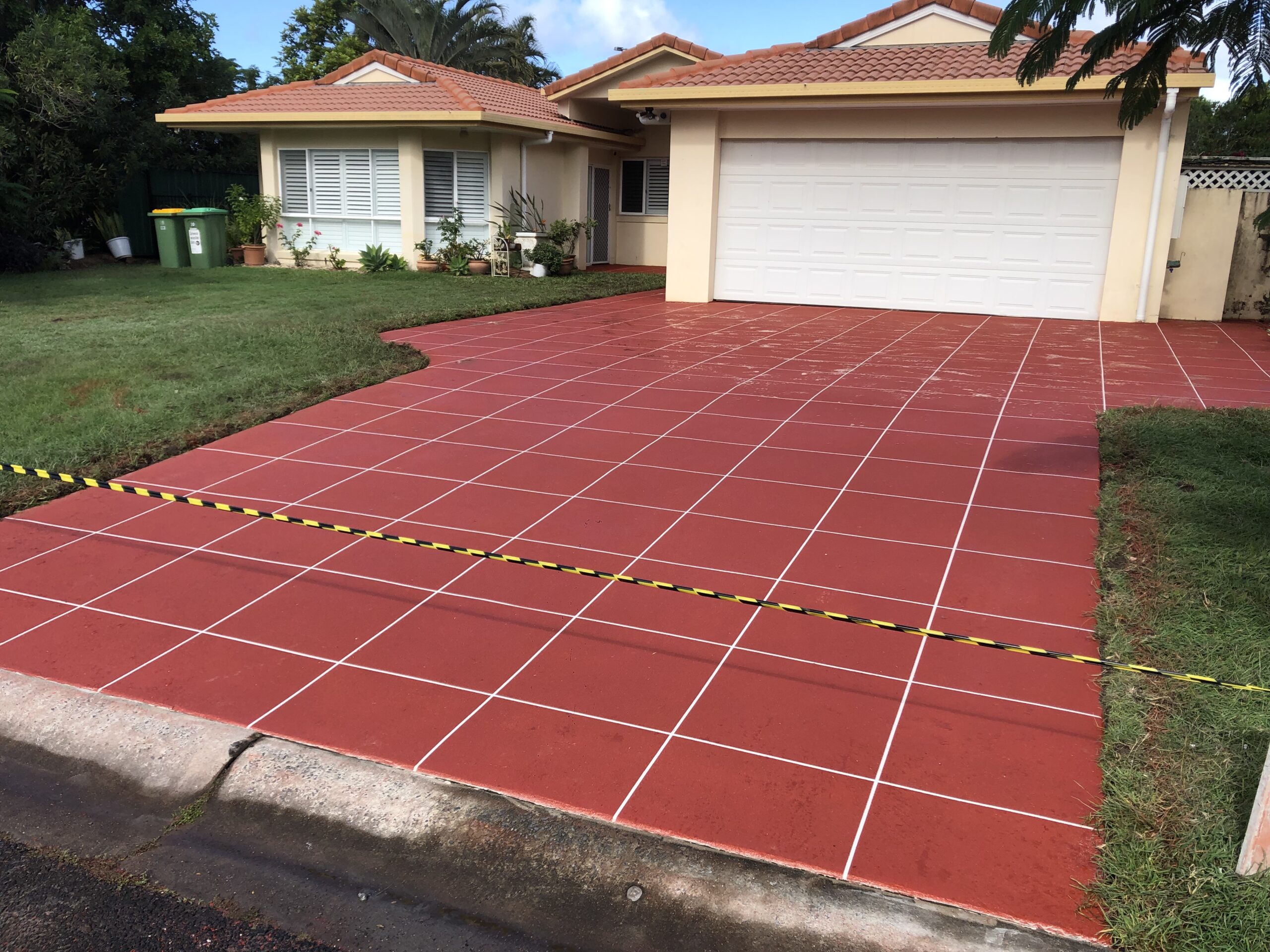
Depending on the selected system and specification, the finished surface can be sprayed, trowelled or textured and can incorporate colours, patterns, custom graphics and differing levels of surface texture.
That makes overlays particularly useful in high-visibility environments where the existing concrete may still be structurally useful but no longer meets the site’s presentation or surface-performance requirements.
On the Gold Coast, that can include retail precincts around Southport and Robina, school pathways, strata common property in Hope Island, public access areas around Surfers Paradise and Burleigh Heads, entertainment precincts in Coomera and Oxenford, and commercial properties throughout Helensvale, Nerang and Parkwood.
But an overlay should be viewed as an engineered surface system, not as paint for concrete.
The First Decision: Is the Existing Concrete Actually Worth Keeping?
This is where commercial resurfacing differs from the way it is often marketed.
A tired-looking slab can be a very good resurfacing candidate. A relatively good-looking slab can also be a poor candidate if it is moving underneath.
A commercial site assessment should therefore look beyond the visible top few millimetres. Cracks need to be interpreted rather than simply filled. Changes in level can indicate movement. Ponding may reveal inadequate falls. Failure along an edge can point to loss of support. Repeated cracking through earlier repairs may indicate that the original cause was never corrected.
Where these deeper problems are present, concrete replacement can be the more economical decision over the life of the asset, even if resurfacing appears less expensive initially.
Cracks Are Not All the Same
This is one of the biggest differences between a professional assessment and a cosmetic resurfacing quote.
Concrete cracks for many reasons. Drying shrinkage, thermal movement, inadequate joints, changes in support, tree roots, drainage problems, pipe failures, traffic vibration and ground settlement can all contribute.
The important issue is whether the crack represents historical movement that has stabilised, or whether two sections of the slab are still moving independently.
An overlay bonds to the surface below it. It does not magically reconnect two structurally separated slabs.
For that reason, simply hiding every crack beneath a new coating is not good commercial asset management. Active cracks and movement can reflect through a new surface. In some locations, local repairs may be practical. In others, partial or full replacement of the failed section should occur before surrounding areas are resurfaced.
OSM’s broader Gold Coast concrete maintenance guide explains the repair, resurface or replace decision in more detail for strata, schools, plazas and public spaces.
Control Joints Still Matter After Resurfacing
A good overlay should not pretend the original slab has stopped being concrete.
Concrete will continue to respond to shrinkage, thermal change and movement after the resurfacing system has been installed. Existing control joints therefore need to be considered as part of the resurfacing design rather than simply buried.
This is reflected in commercial product specifications. For example, Concrete Colour Systems’ official Stylepave Overlay specification guidance requires the underlying concrete to be structurally sound and calls for existing control joints to be re-cut through the resurfacing system.
For a high-traffic project, that detail is important. A beautiful uninterrupted surface on handover day is of little value if normal slab movement later creates uncontrolled cracking in the overlay.
High Traffic Changes the Specification
There is no meaningful one-size-fits-all specification called simply “commercial grade”.
A school courtyard and a delivery accessway are both commercial areas, but they do very different work.
A theme park queue may carry very high volumes of pedestrian traffic. A shopping centre pathway can be exposed to pedestrians, cleaning equipment, trolleys and regular washing. A strata driveway introduces turning tyres and vehicle loads. A service route may also be exposed to bins, maintenance equipment and delivery vehicles.
The resurfacing system and surface texture need to be matched to that actual traffic.
| Area | Typical demands | Key resurfacing considerations |
|---|---|---|
| Retail plaza or shopfront | Continuous pedestrian traffic, trolleys, cleaning and presentation requirements | Slip resistance, wear, colour consistency, staging and access |
| School pathway | Concentrated pedestrian movements, weather exposure and cleaning | Safe texture, drainage, holiday programming and controlled reopening |
| Theme park or attraction | Very high pedestrian use, wet-weather exposure and strong presentation requirements | Durability, slip resistance, custom finishes, sampling and maintenance access |
| Strata common area | Residents, visitors, deliveries and ongoing access requirements | Staging, communication, trip hazards, drainage and maintenance |
| Vehicle area | Tyres, turning forces and vehicle loads | System suitability, substrate integrity, curing and traffic restrictions |
This is also why manufacturers may alter their specifications for different applications. Some Australian resurfacing systems prescribe heavier application rates for busy shopping footpaths and malls than they do for lighter-duty areas.
Product selection should follow the site assessment and performance requirement, not the other way around.
Product Examples: What Is Used in the Australian Market?
There are a number of established polymer-modified resurfacing systems available in Australia. Examples that project teams may encounter include CCS Stylepave Overlay systems and Dulux Avista Resurfacing Compound.
These products are not interchangeable specifications, and naming a recognised product does not automatically make it appropriate for a particular project. Manufacturers publish different requirements for substrate preparation, application rates, primers, sealing, curing, traffic and maintenance.
OSM Concrete has experience working with a broad range of resurfacing products and selects systems according to the project rather than treating one brand as the answer to every surface.
What matters more than the logo on the bag?
The existing concrete condition, preparation method, bond, application thickness, traffic classification, joints, surface texture, sealing system, curing conditions and workmanship.
Surface Preparation Is Where Many Overlay Failures Begin
Resurfacing relies heavily on bond.
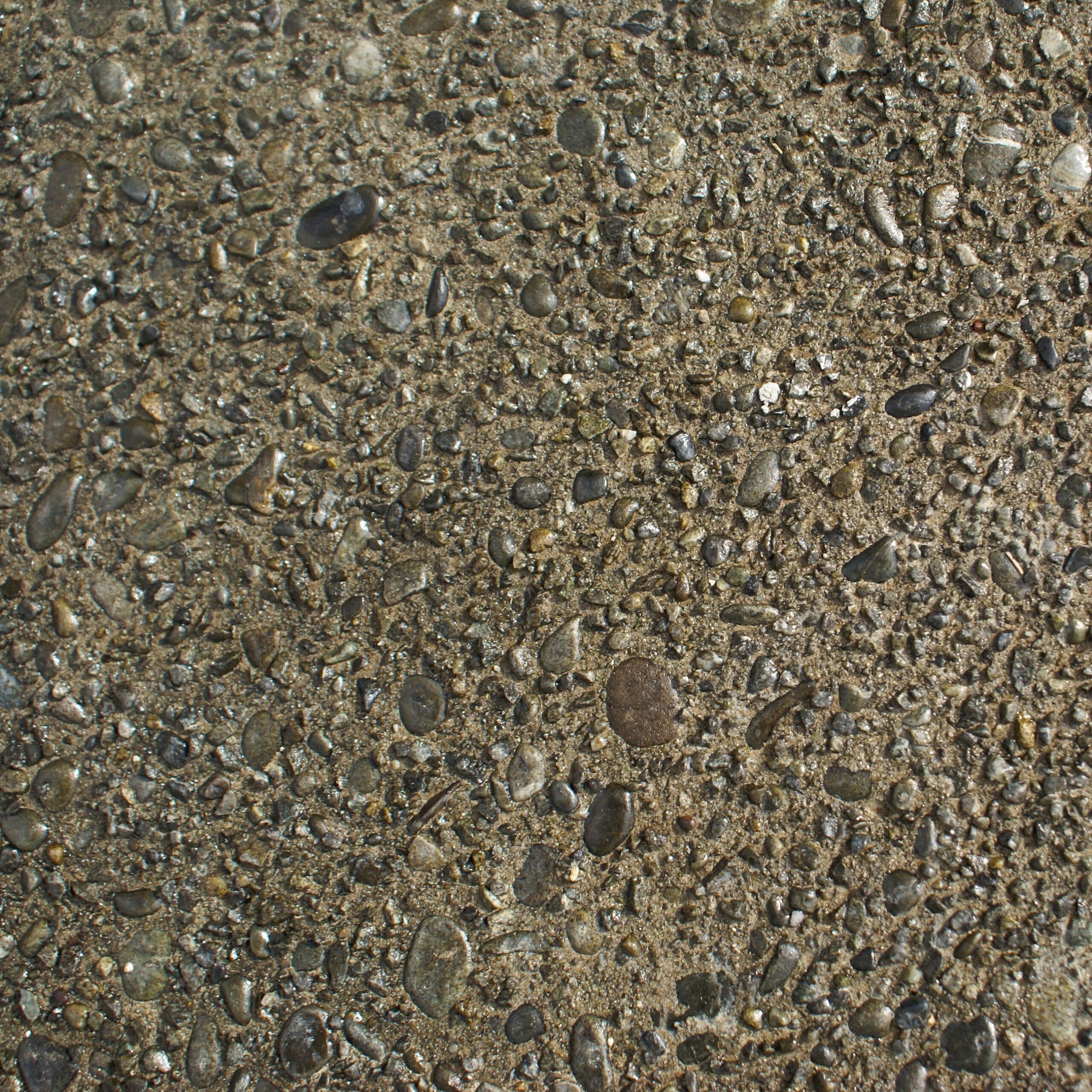
The new material needs a properly prepared substrate rather than a surface contaminated by oil, old coatings, weak laitance, loose material or poorly bonded previous repairs.
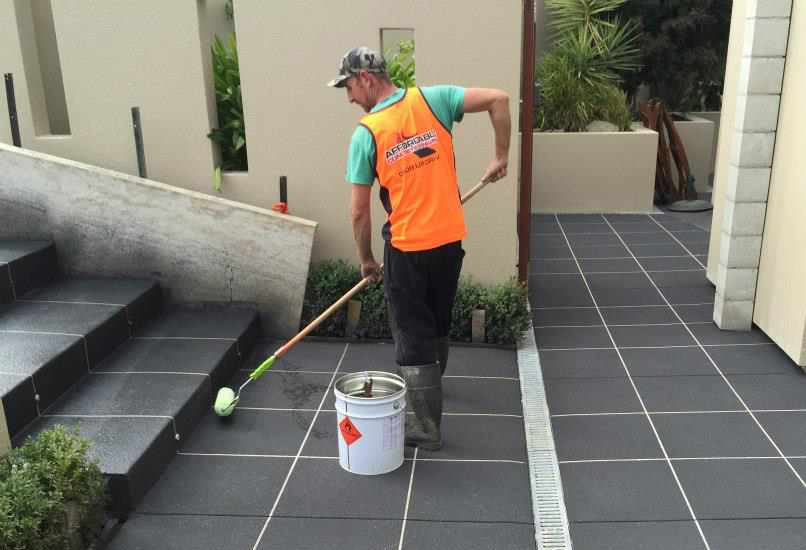
Preparation may therefore involve mechanical grinding, removal of old coatings or failed material, degreasing, cleaning, crack assessment and local repair before the resurfacing system starts.
A commercial project may also require test areas or samples before full production. This is particularly valuable when the colour, texture and slip performance matter to an architect, facility manager, body corporate committee or attraction operator.
Samples can answer questions that a brochure cannot. How does the finish look against the building? Is the texture appropriate? Does the selected colour behave differently in full sun? How will adjacent old and new areas read together?
For larger sites, approving that benchmark early can reduce uncertainty and establish an agreed finish before the main works proceed.
Slip Resistance Is a Design Requirement, Not a Final Add-On
High-traffic external concrete on the Gold Coast routinely experiences wet conditions, shade, wind-driven rain, cleaning and contamination carried in by pedestrians.
That makes surface texture especially important around entries, ramps, school pathways, strata common areas, entertainment venues, pools and public pedestrian routes.
A finish that photographs beautifully but becomes inappropriate when wet is not a successful commercial specification.
Texture, sealer and the site’s actual use should therefore be considered together. In some environments, the desired visual finish may need to be adjusted to achieve an appropriate level of traction.
This is particularly relevant to OSM’s work in theme parks and high-traffic public spaces, where presentation and pedestrian performance need to coexist.
Gold Coast Conditions Make Drainage Especially Important
Resurfacing can improve the finish of an existing concrete surface, but it should not be used to disguise a drainage problem.
If water is already ponding because the slab has sunk or was constructed with inadequate falls, applying an overlay without understanding the levels may simply leave the underlying problem in place.
Persistent moisture can also influence staining, cleaning requirements, slip risk and long-term surface performance.
That is why OSM approaches commercial concrete as a complete system. On larger commercial concrete projects and civil concrete works, drainage, access, joints and loading all need to be considered alongside the visible finish.
Can Resurfacing Work on a Live Commercial Site?
Yes, and this is one of the strongest reasons to consider resurfacing when the substrate is suitable.
Demolition and replacement can involve saw cutting, excavation, spoil removal, reinforcement, concrete placement and a longer sequence before the completed area returns to service. Resurfacing can potentially reduce the extent of demolition and help a project team stage the work in smaller zones.
But “less disruptive” does not mean “no disruption”.
The overlay still needs appropriate preparation, application, curing and protection from premature traffic. Commercial programming should therefore work backwards from the required reopening time rather than promising a finish first and trying to make the programme fit later.
- pedestrian detours and temporary access routes;
- tenant, resident or staff notifications;
- deliveries and waste collection;
- school operating hours or holiday periods;
- theme park maintenance windows;
- weather and overnight moisture;
- product cure requirements;
- vehicle exclusion periods;
- staging boundaries and visual consistency between stages.
Manufacturer cure requirements can vary substantially between systems, sealers and site conditions. Some systems may restrict pedestrian access for around 48 hours and recommend limiting full use for considerably longer, while other products specify different foot and vehicle traffic windows.
Commercial programming point: reopening requirements should always be confirmed against the exact resurfacing system, primer, sealer and application specification selected for the project. A site manager should not assume every overlay is ready for pedestrian or vehicle traffic at the same time.
Real-World Example: Resurfacing a School Plaza
One of the best examples of why staging matters is a school environment.
OSM has completed school plaza work involving both new concrete and concrete resurfacing. The work had to be coordinated around school activity so the improved surface could be delivered without creating unnecessary conflict with normal site use.
That is representative of the wider commercial resurfacing problem. The technical system is only part of the job. The contractor must also understand who uses the area, when they use it, how access will be maintained and how each stage connects to the next.
Schools, retail plazas and strata complexes may have very different users, but all three share this requirement: the construction programme has to work around an operating site.
Gold Coast Project Experience: High-Traffic Theme Park Environments
OSM’s work at Warner Bros. Movie World provides another useful real-world example of why commercial surface work is about more than simply applying a finish.
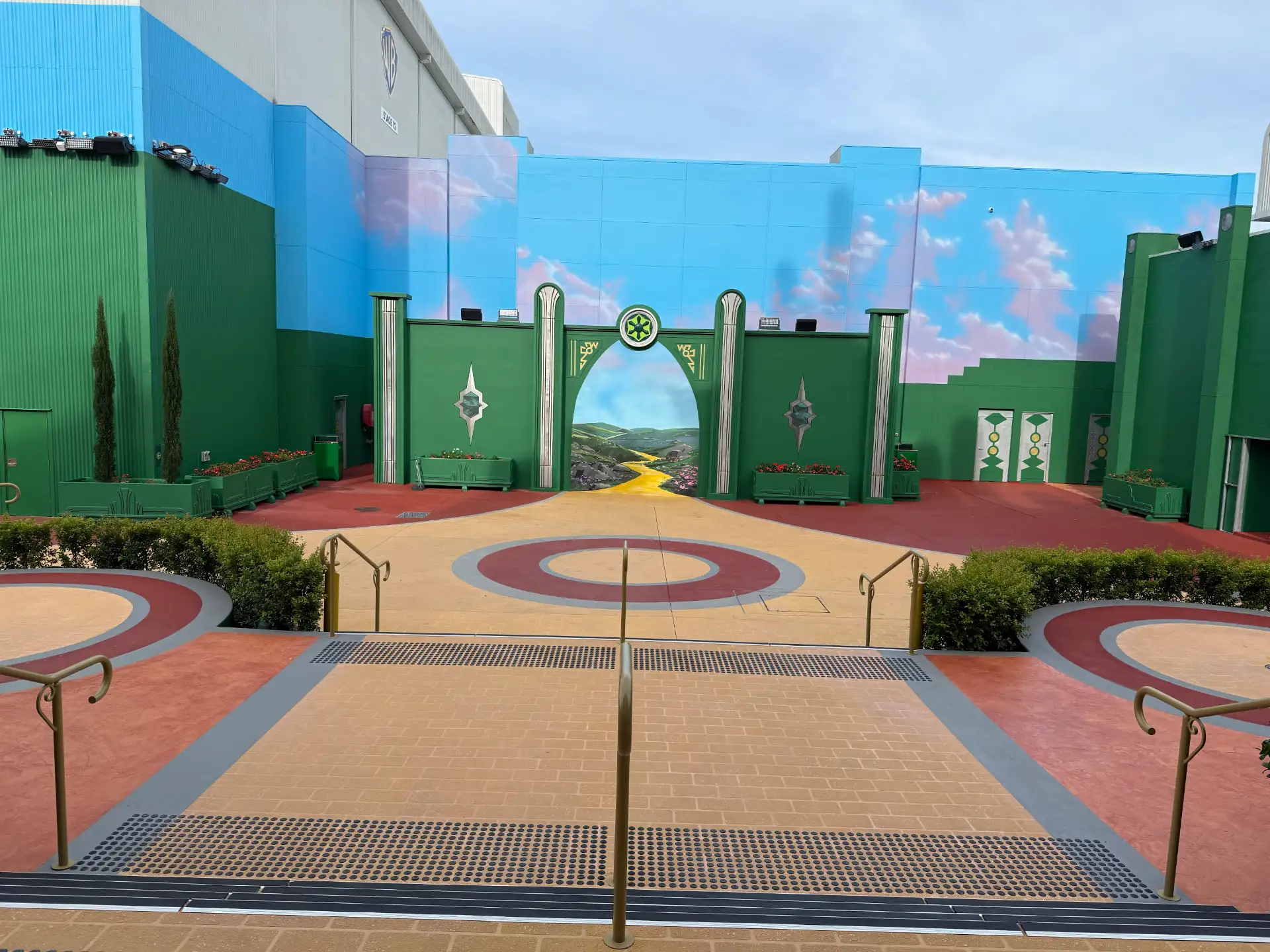
For the Wizard of Oz precinct, OSM delivered more than 2,500m² of highly specialised decorative concrete finishes incorporating numerous colours, textures and custom treatments.
The project required extensive sample development before construction, coordination with multiple trades, restricted access, tight programme requirements and detailed surface finishing.
Not every commercial resurfacing project needs that level of customisation, but the underlying process is relevant: understand the performance brief, develop and approve the finish, plan the work around the site, then execute consistently at scale.
When Would OSM Recommend Replacement Instead?
There are commercial sites where resurfacing simply is not the responsible recommendation.
If investigation shows significant structural movement, widespread deep cracking, sinking slabs, loss of support, major drainage failure or repeated failure of previous repairs, the existing concrete may no longer be a suitable substrate.
That does not necessarily mean every square metre needs to be removed. Larger sites can sometimes use a combined strategy where failed sections are removed and replaced while structurally sound surrounding areas are resurfaced to achieve a more consistent final appearance.
This hybrid approach can be particularly useful on older commercial and strata properties where different sections of concrete have experienced different loads, drainage conditions or construction histories.
| Condition | Typical response |
|---|---|
| Sound slab, tired or worn surface | Strong resurfacing candidate |
| Sound slab, outdated or inconsistent finish | Resurfacing may provide a uniform new surface |
| Localised defect with otherwise stable concrete | Repair first, then assess resurfacing |
| Active structural crack or slab movement | Investigate the cause. Resurfacing alone is unlikely to solve it |
| Major sinking or base failure | Replacement is generally the better long-term solution |
| Unresolved drainage or significant ponding | Correct levels or drainage before selecting the surface system |
Where Commercial Resurfacing Makes the Most Sense
On suitable concrete, overlays can be particularly effective in areas where retaining the existing slab offers operational and visual advantages.
This can include shopping-centre entries, retail plazas, school courtyards, pathways, pedestrian precincts, strata common areas, entertainment venues, public spaces and selected commercial access areas.
OSM works across the Gold Coast, including commercial and civil environments around Southport, Helensvale, Coomera, Burleigh Heads and Surfers Paradise, as well as surrounding commercial and public-use precincts.
For councils and public infrastructure managers, OSM also delivers council and infrastructure concrete works. For occupied complexes, there is a dedicated strata concrete maintenance service.
Five Questions We Would Ask Before Specifying an Overlay
Rather than beginning with “What colour do you want?”, a commercial resurfacing assessment should start with five more useful questions.
1. Is the underlying slab stable?
If the slab is continuing to move, a new surface is unlikely to stop the movement.
2. What traffic will the area actually carry?
Foot traffic, trolleys, cleaning machines, passenger vehicles, service vehicles and turning tyres impose different requirements.
3. What happens when the area is wet?
Drainage and slip resistance can be more important than the decorative appearance of the finish.
4. How quickly must the area return to service?
The cure requirements of the selected system need to align with the site’s operating programme.
5. What does success look like five years from now?
The right decision should consider cleaning, maintenance, traffic, future repairs and the probability of substrate movement, rather than judging the project only on handover day.
Resurfacing Is an Asset Decision, Not Just a Cosmetic One
The biggest mistake with commercial concrete resurfacing is thinking of it only as a facelift.
For the right slab, an overlay can restore presentation, introduce a more appropriate texture, create visual consistency between different sections of concrete and avoid unnecessary demolition.
For the wrong slab, the exact same process can simply place an attractive new surface over a problem that is still moving underneath.
The value therefore comes from choosing the correct treatment.
OSM’s experience across commercial sites, strata properties, council environments, public spaces and Gold Coast theme parks means the project can be assessed as a complete site rather than automatically forcing one product or one process onto every area.
You can also view OSM’s completed concrete projects across the Gold Coast to see how different construction, resurfacing and replacement strategies have been used in real environments.
Not Sure Whether Your Commercial Concrete Should Be Resurfaced or Replaced?
If you manage a shopping centre, school, strata complex, commercial property, public facility or other high-use site on the Gold Coast, OSM Concrete can assess the existing surface and help determine whether repair, resurfacing, partial replacement or full replacement offers the better long-term result.
Send through your site details, plans or photographs and the OSM project team can discuss the next step.
Request a Commercial Concrete Assessment