

Concrete Driveways | Resurfacing vs Replacement | Gold Coast
If your driveway is worn, faded or cracked, the natural question is whether it can be resurfaced or whether it needs to come out entirely. The honest answer depends on what’s happening beneath the surface, not how the driveway looks from the street. A tired but structurally sound slab is a straightforward resurfacing job. A slab that’s moving, settling or sitting on a failed base will keep failing no matter what’s applied on top of it, and no amount of surface work will change that.
This guide is written for homeowners assessing a residential driveway, and it works through every common driveway problem on the Gold Coast: worn but stable surfaces, fading, superficial cracking, structural cracking, tree root damage, sinking slabs, drainage failure, badly placed joints, failed base, and old exposed aggregate. If you’re managing a commercial or civil site, our guide to commercial concrete repair vs replacement covers that scope instead, and our concrete repairs page covers when a targeted repair, rather than resurfacing or full replacement, is genuinely enough.
Resurface or replace, which does your driveway need?
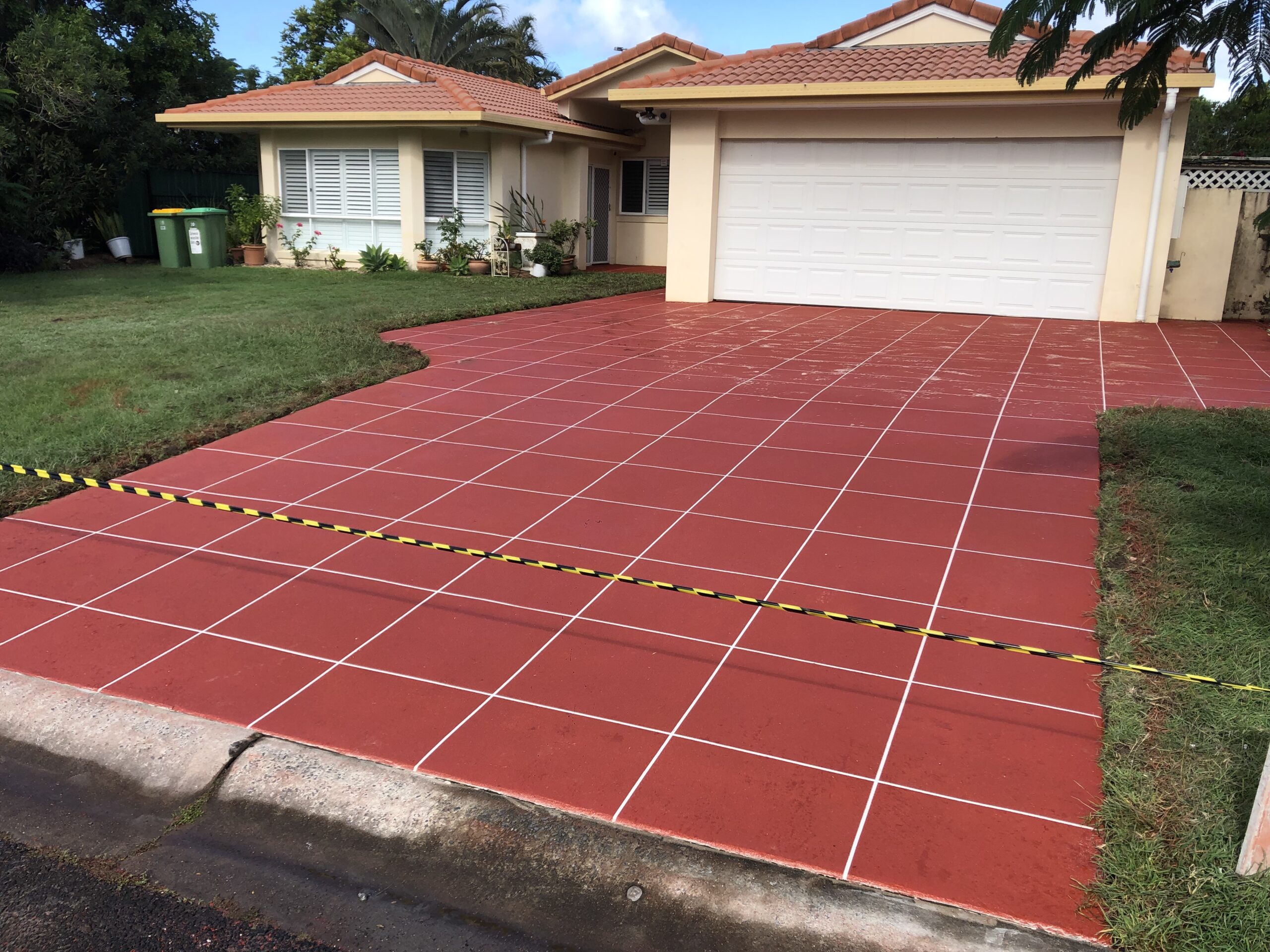
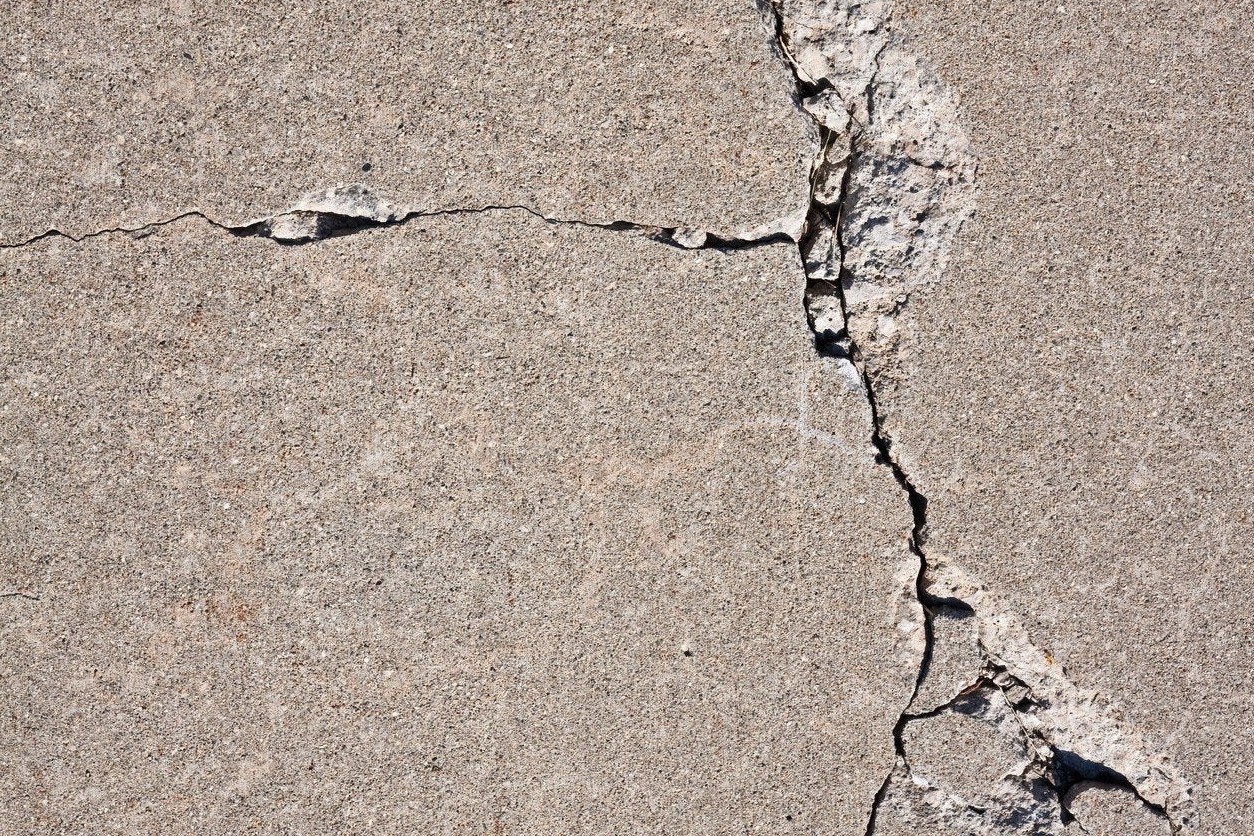
Worn but stable, resurface. If the slab underneath is sound and the problem is cosmetic, faded colour, superficial cracking, a dated finish, resurfacing is the faster, lower-cost option. Structurally compromised, replace. If there’s genuine movement, a failed sub-base or serious drainage failure, resurfacing hides the problem temporarily. It always comes back, usually within a season or two, because the cause was never addressed.
Ten Driveway Problems, and What Each One Usually Means
Most driveway questions fall into one of ten patterns. Each one points toward resurfacing, repair or replacement for a different reason, and mixing them up is the most common mistake homeowners and even some contractors make.
Tap or walk the slab. Nothing moves, flexes or sounds hollow, and cracking is fine and stable? Resurfacing is likely enough. Feel a step across a crack, see a section lower than its neighbour, or notice water pooling somewhere it didn’t used to? That’s a replacement conversation.
Why Slabs Actually Fail: The Engineering Behind the Symptoms
Understanding why concrete settles, cracks or lifts makes the resurface-or-replace decision far less guesswork. Most residential slab failure traces back to one of three root causes: soil movement, water, or an under-built original slab.
Soil Movement and Reactive Clay
The Gold Coast, along with the rest of South East Queensland, sits in a region where reactive clay soils are common. Under AS 2870, Residential Slabs and Footings, sites are classified from A (stable sand or rock) through S, M, H1, H2 and E (increasingly reactive clay) to P (problem sites requiring individual engineering). Highly plastic clays common across South East Queensland, including much of the Gold Coast hinterland, typically test in the H1 to H2 reactivity range.
What reactivity actually means for a driveway: reactive clay shrinks as it dries and swells as it absorbs moisture, a cycle known as shrink-swell movement. A concrete slab sitting on top of that clay covers the ground beneath it, changing how it dries out compared to the exposed soil at the slab’s edge. This uneven drying between the covered and exposed soil is a genuine, documented cause of edge drop and differential settlement, where the edge of a driveway sinks relative to the middle, or one section moves independently of its neighbour. It’s not a defect in the concrete itself; it’s a consequence of what’s happening in the ground it sits on.
Water Is the Dominant Cause
of residential settlement cracking cases trace directly back to water, whether surface water eroding soil from beneath the slab, subsurface water washing out fine soil particles, or moisture fluctuation in reactive clay, according to residential concrete failure analysis. Getting drainage right is the single highest-leverage thing a homeowner can control.
The maths behind this is easy to underestimate. A typical Gold Coast downpour delivering an inch of rain onto an average residential roof generates several hundred gallons of water at each downspout. If that water discharges directly beside a driveway edge rather than being carried away, it concentrates a genuinely large volume of water against the same few square metres of ground, over and over, every time it rains. That’s exactly the kind of repeated saturation that erodes support from under a slab edge over time.
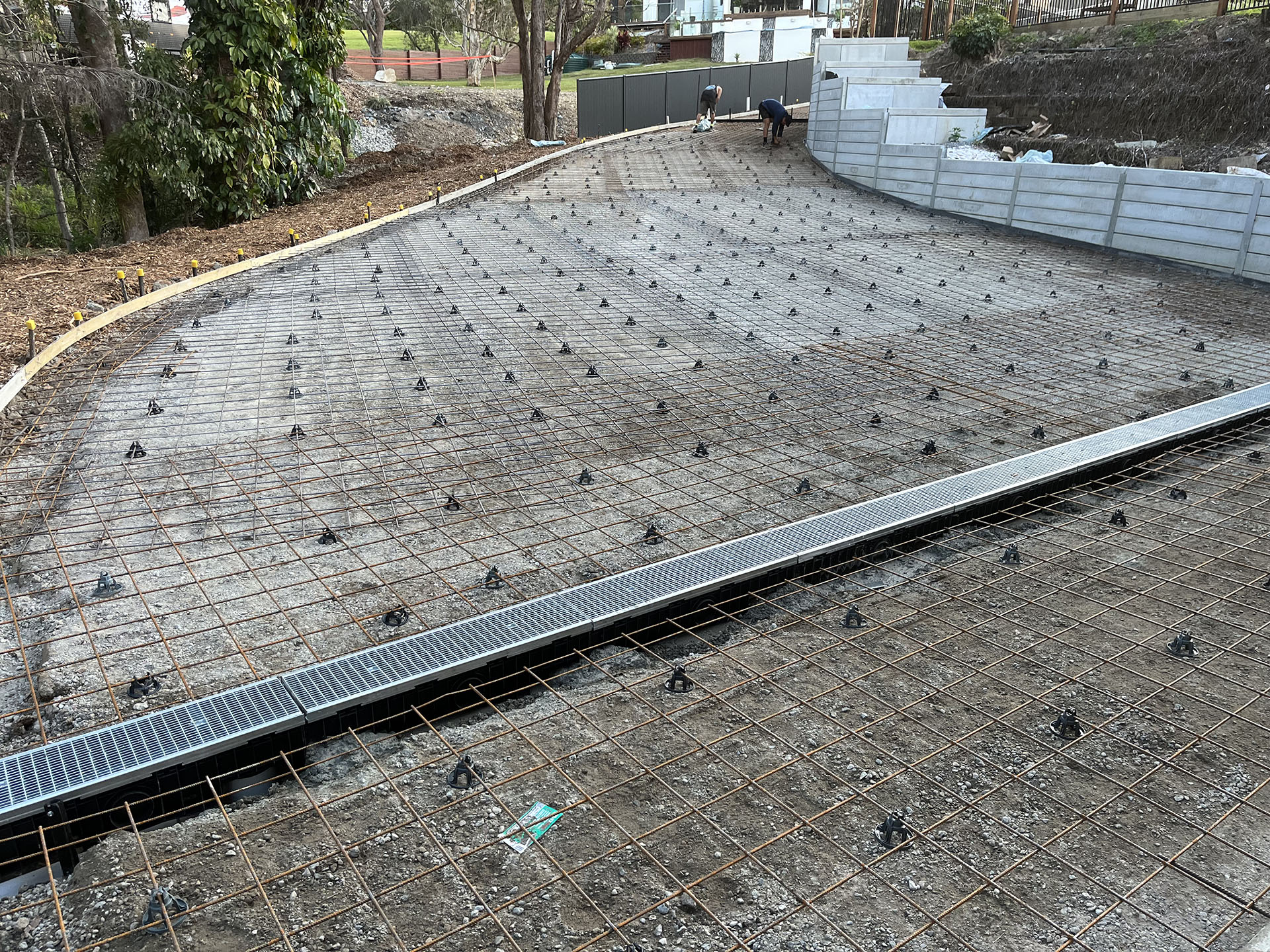
Correct Driveway Falls
Australian civil design practice commonly specifies a cross fall in the order of 1 to 2.5% on paved surfaces and footways, enough to shed water reliably without being noticeable underfoot. Below roughly a 1:60 fall, water increasingly fails to drain and tends to pond rather than run off. A driveway poured too flat, or one where the fall has reversed due to settlement, will hold water against the slab and the sub-base beneath it indefinitely, which accelerates exactly the kind of erosion and soil movement described above.
Doing the maths on a random-cracking driveway
Residential concrete driveways in Australia are governed by AS 3727.1-2016, Pavements, Residential, which sets out slab thickness and jointing requirements for light-usage residential driveways and crossovers. A widely used field rule for control joint spacing on a standard 100mm-thick residential slab is a maximum of roughly 3 to 4 metres between joints, with panels kept as close to square as practical, since a length-to-width ratio no greater than about 1.5:1 avoids concentrating diagonal tension near the corners.
Here’s what that means on an actual driveway. A 100mm slab poured 12 metres long with joints only at each end, instead of the roughly three to four intermediate joints the panel spacing above would call for, has nowhere planned for the concrete’s natural shrinkage movement to go. The result isn’t hypothetical: it’s a random crack roughly every 3 to 4 metres anyway, just in whatever location happened to be weakest, instead of at a joint designed to hide it.
This is precisely why patching the same “random” crack repeatedly on an older driveway often doesn’t hold: if the original pour was under-jointed for its length, the slab will keep finding a new place to relieve that same shrinkage stress. In that scenario, replacement with a correctly spaced joint layout resolves the actual cause; another patch on the same crack does not.
Tree Roots: The Mechanism Most Homeowners Get Wrong
Tree root damage is one of the most common driveway complaints on the Gold Coast, and it’s also one of the most commonly misunderstood. The instinctive picture is a thick root physically punching straight through the slab. In reality, that’s the less common mechanism.
What’s usually actually happening: tree roots grow toward moisture, and a driveway edge with poor drainage or a garden bed watered regularly right beside it is exactly the kind of moist zone roots gravitate to. As roots establish themselves in that zone, two things can happen. A larger root can grow directly beneath the slab and lift it as it thickens, which is the dramatic version most people picture. More often, though, root activity draws moisture unevenly from the soil around and beneath the slab edge, contributing to the same reactive-clay shrink-swell movement described above, and the driveway develops the same kind of differential settlement or edge cracking as any other soil-moisture-driven failure. In either case, the roots rarely cause damage to a slab with no pre-existing weakness; they exploit and accelerate movement that was already starting for other reasons, particularly drainage.
This matters for the resurface-or-replace decision because it changes what actually needs to happen. If a large structural root has genuinely lifted a slab, that section needs replacement, and depending on the tree’s proximity and root system, ongoing management (root pruning, a root barrier, or in some cases tree removal) may be needed to stop the same movement recurring. If the issue is really uneven moisture and drainage near an established tree, correcting the drainage as part of a replacement is often just as important as the new concrete itself.
Before assuming a nearby tree is the cause, check where water actually goes around that section of driveway after rain. If garden irrigation, a downpipe, or a low point in the lawn is keeping the soil near the tree and the slab edge consistently damp, that moisture pattern, not just the tree’s presence, is very likely doing most of the work. Fixing the drainage can sometimes be as important as dealing with the root itself.
When It’s Genuinely Not Obvious
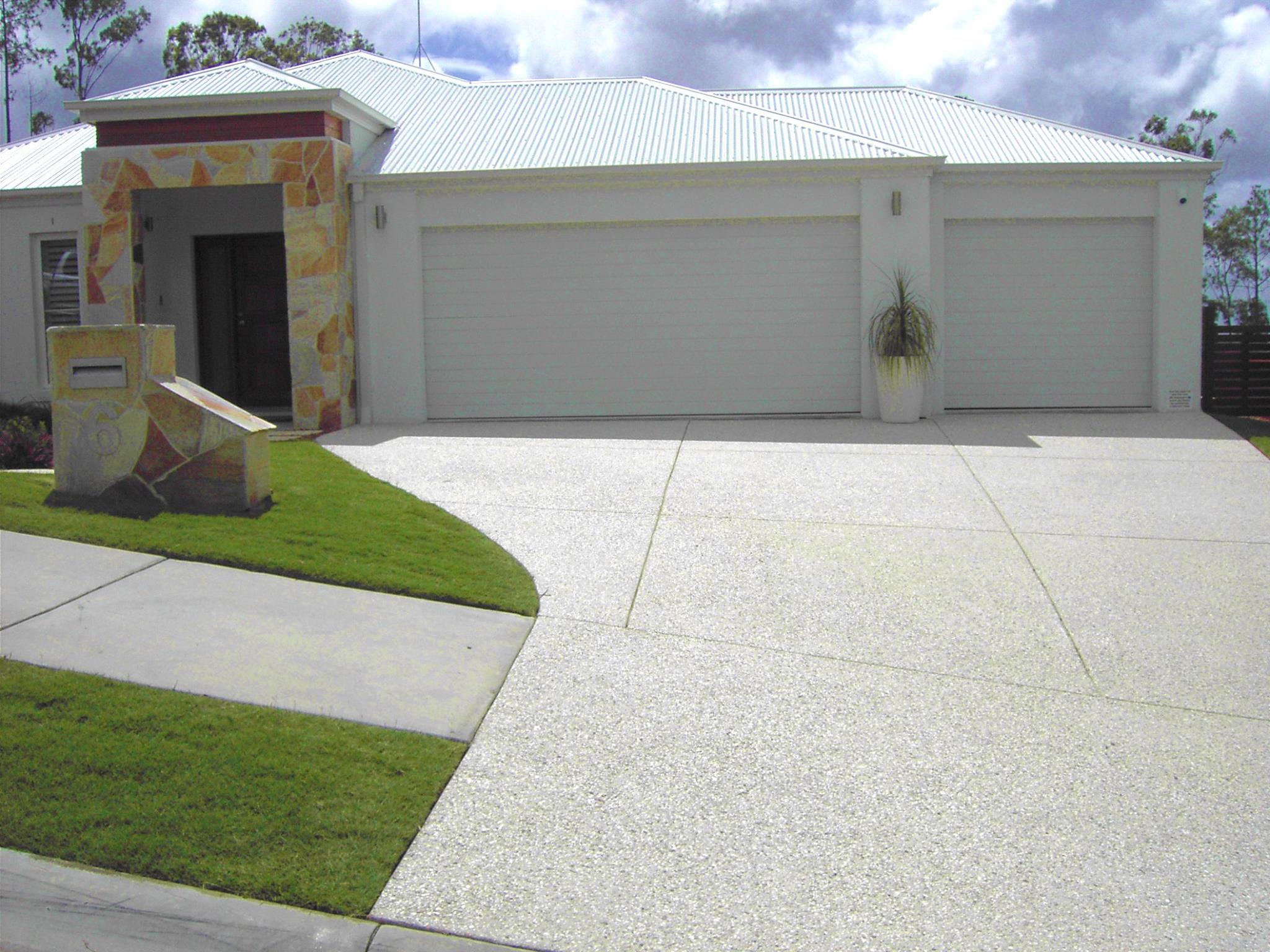
Some driveways sit in a real grey area, a mix of stable sections and a few problem areas, or cracking that could be superficial or could be early-stage structural movement. This is common, and it’s exactly why an on-site assessment beats guessing from a description or a phone photo. Getting this call wrong in either direction costs money: replacing something that only needed resurfacing, or resurfacing over something that needed replacing and watching it fail again within a year or two.
Listen and feel for hollow sections, rocking panels, or noticeable steps across any crack. A solid, level sound and feel is a good early sign.
Note anywhere water pools, tracks toward the house, or takes longer than normal to clear. This often points straight at the cause.
A crack that’s been the same width for years behaves very differently to one that’s visibly opened further in the last twelve months.
A crack that’s already been patched once and reopened is telling you the underlying cause was never addressed.
The signs above narrow the likely outcome, but a proper inspection is the only reliable way to confirm repair, resurface or replace.
Homeowner rule: if a previous contractor has already patched the same crack more than once and it’s reopened each time, that’s not a sign you need a better patch. It’s a sign the slab is still moving, or was under-jointed to begin with, and the patch was never going to hold.
What This Means for Cost and Timeline
Resurfacing is generally faster and less expensive than replacement, since it works with the existing slab rather than removing and re-pouring it. A typical residential resurfacing job can often be completed in a matter of days.
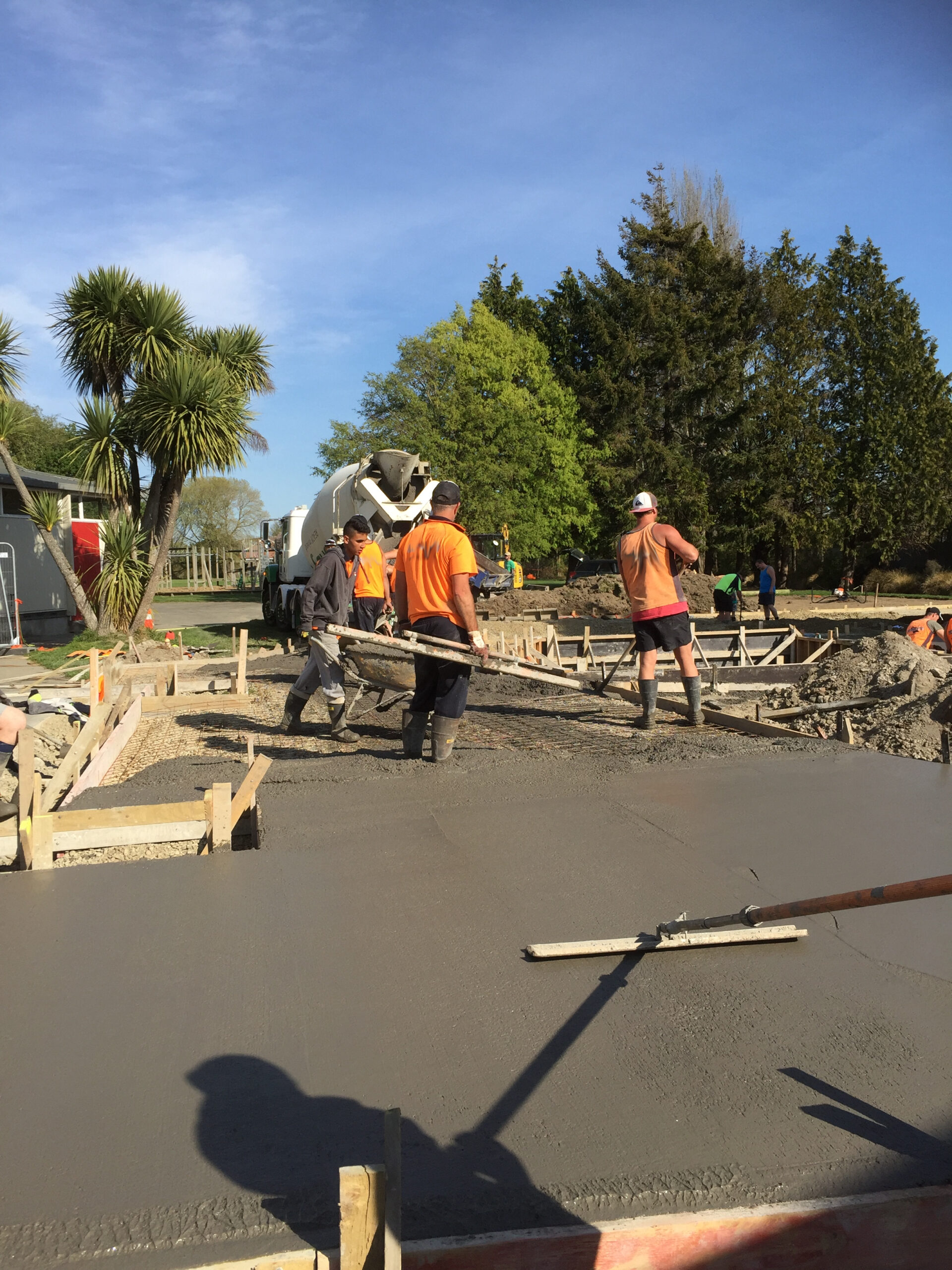
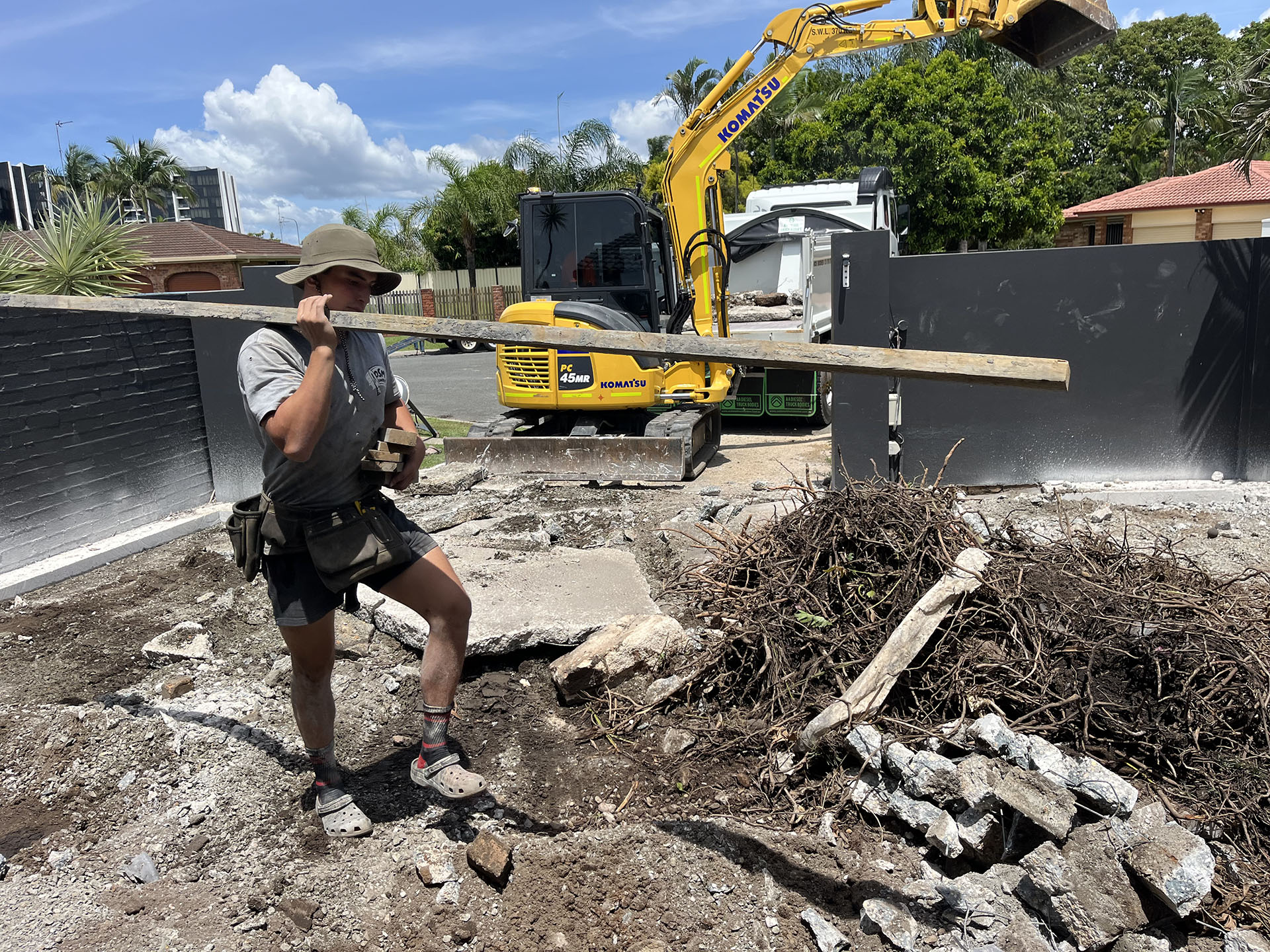
Replacement takes longer, demolition, removal, base preparation and a full new pour with proper curing time, but it’s the only option that actually resolves a structural or base problem rather than covering it. Resurfacing a driveway with an underlying structural issue often ends up costing more overall once it fails and needs replacing anyway.
Resurfacing vs Replacement: Decision Table
| Driveway condition | Resurface? | Replace? |
|---|---|---|
| Worn, faded, but stable underfoot | Strong candidate | Unnecessary |
| Fine, stable hairline cracking across the surface | Strong candidate | Unnecessary |
| Old exposed aggregate, worn smooth | Strong candidate | Unnecessary |
| Crack with a visible step or widening | Poor candidate, won’t resolve the cause | Strong candidate |
| Lifting or cracking near established tree roots | Poor candidate while movement is active | Strong candidate |
| Sinking or uneven sections | Follows the same uneven profile | Strong candidate |
| Ponding water or backfall toward structures | Rarely resolves the cause | Often required |
| Recurring cracks despite repeated patching | Unlikely to hold | Worth investigating, see joint spacing example above |
| Widespread cracking and movement across large areas | Poor candidate, base issue persists underneath | Strong candidate |
Driveway Resurfacing vs Replacement FAQs
Can a cracked concrete driveway be resurfaced instead of replaced?
Sometimes. If the cracking is superficial, stable and the slab underneath hasn’t moved, resurfacing can address it. If the cracking indicates structural movement, base failure or ongoing settlement, resurfacing won’t resolve the underlying cause and replacement is the more durable option.
How do I know if my driveway is sinking?
Common signs include visible unevenness between adjoining sections, water pooling where it previously drained, or a noticeable dip or slope that wasn’t there originally. This usually indicates the base beneath the slab has moved or eroded, often linked to reactive clay soil movement or drainage issues.
Do tree roots really damage concrete driveways?
Yes, but usually not by physically breaking through sound concrete. More often, tree roots draw moisture unevenly from the soil near a driveway edge, contributing to the same reactive-clay shrink-swell movement that causes settlement generally. Roots more often exploit and accelerate existing weakness, particularly poor drainage, rather than causing damage on their own to an otherwise sound, well-supported slab.
Why does my driveway keep cracking in the same spot after being patched?
This is often a sign the original slab wasn’t jointed correctly for its size. Australian residential driveway construction under AS 3727.1 relies on control joints spaced to manage shrinkage, and a slab with joints spaced too far apart, or missing altogether, will keep finding new places to crack as it moves, regardless of how many times the same spot is patched.
Is my Gold Coast property likely to be on reactive clay soil?
Much of South East Queensland, including large parts of the Gold Coast hinterland, has reactive clay soil that is classified under AS 2870 as moderately to highly reactive. Reactive clay shrinks when dry and swells when wet, which is a major contributor to driveway settlement and cracking over time. A soil report prepared for the original build, if available, will state the site’s classification.
Is resurfacing cheaper than replacing a driveway?
Generally yes, since resurfacing works with the existing slab rather than requiring demolition, removal and a full new pour. However, resurfacing a driveway with an underlying structural or base problem often ends up costing more overall once it fails and needs to be replaced anyway.
What causes a driveway to hold water after rain?
Usually an insufficient surface fall, commonly below the roughly 1:60 gradient generally needed for reliable drainage, or a section that has settled and reversed its original fall. Persistent ponding also accelerates soil erosion beneath the slab, which can worsen settlement over time if left unaddressed.
How long does concrete driveway replacement take?
This varies with size, access and the extent of demolition and base preparation required, but a typical residential driveway replacement takes from several days to a couple of weeks including curing time before the driveway can handle vehicle traffic.
Not Sure Whether Your Driveway Needs Resurfacing or Replacement?
Send OSM Concrete a few photos of the affected area and a short description of what the driveway is doing, including any ponding, movement or previous repairs. We’ll tell you plainly whether resurfacing will do the job or whether replacement is the better long-term option.
Request a Site Assessment