Exposed Aggregate | Resurfacing & Restoration | Gold Coast
Yes, exposed aggregate can be resurfaced, but “resurfacing” covers six very different jobs. A dull, chalky driveway usually needs nothing more than a proper clean and reseal. A driveway losing stones, or one you’re simply tired of, needs something else. A cracked, sinking slab can’t be resurfaced at all. This guide helps you work out which one you’re looking at before you spend anything.
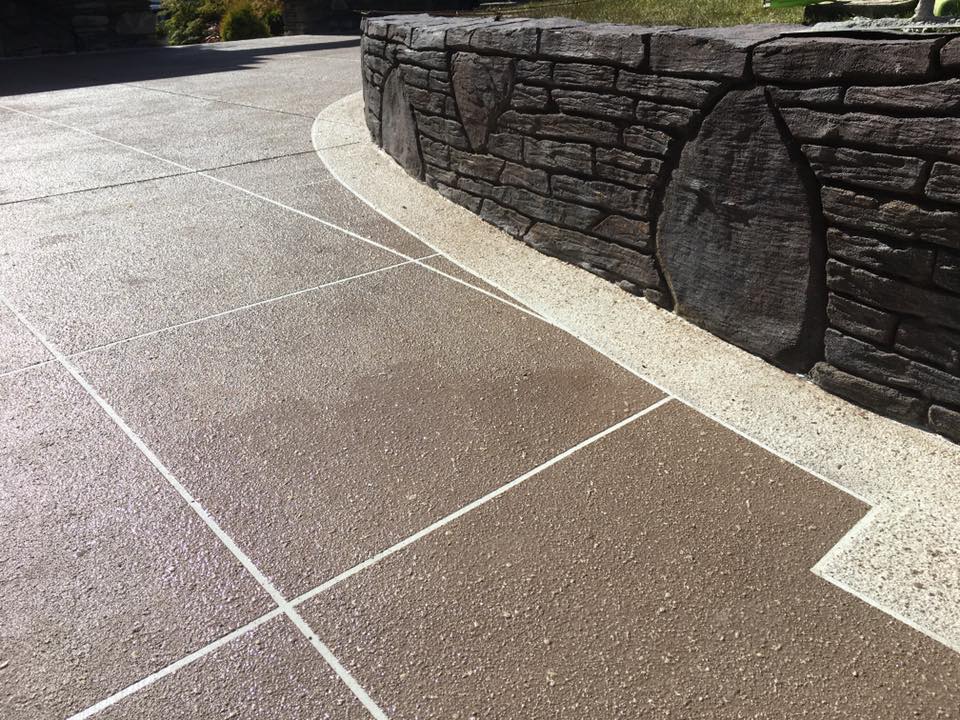
Can exposed aggregate be resurfaced?
Yes, as long as the slab underneath is sound. The options, from least to most invasive:
- Clean and reseal: for dull, faded or stained surfaces
- Strip and reseal: for white, cloudy or peeling sealer
- Spot repair: for loose stones and stable cracks
- Grind and hone: for a smoother, contemporary look
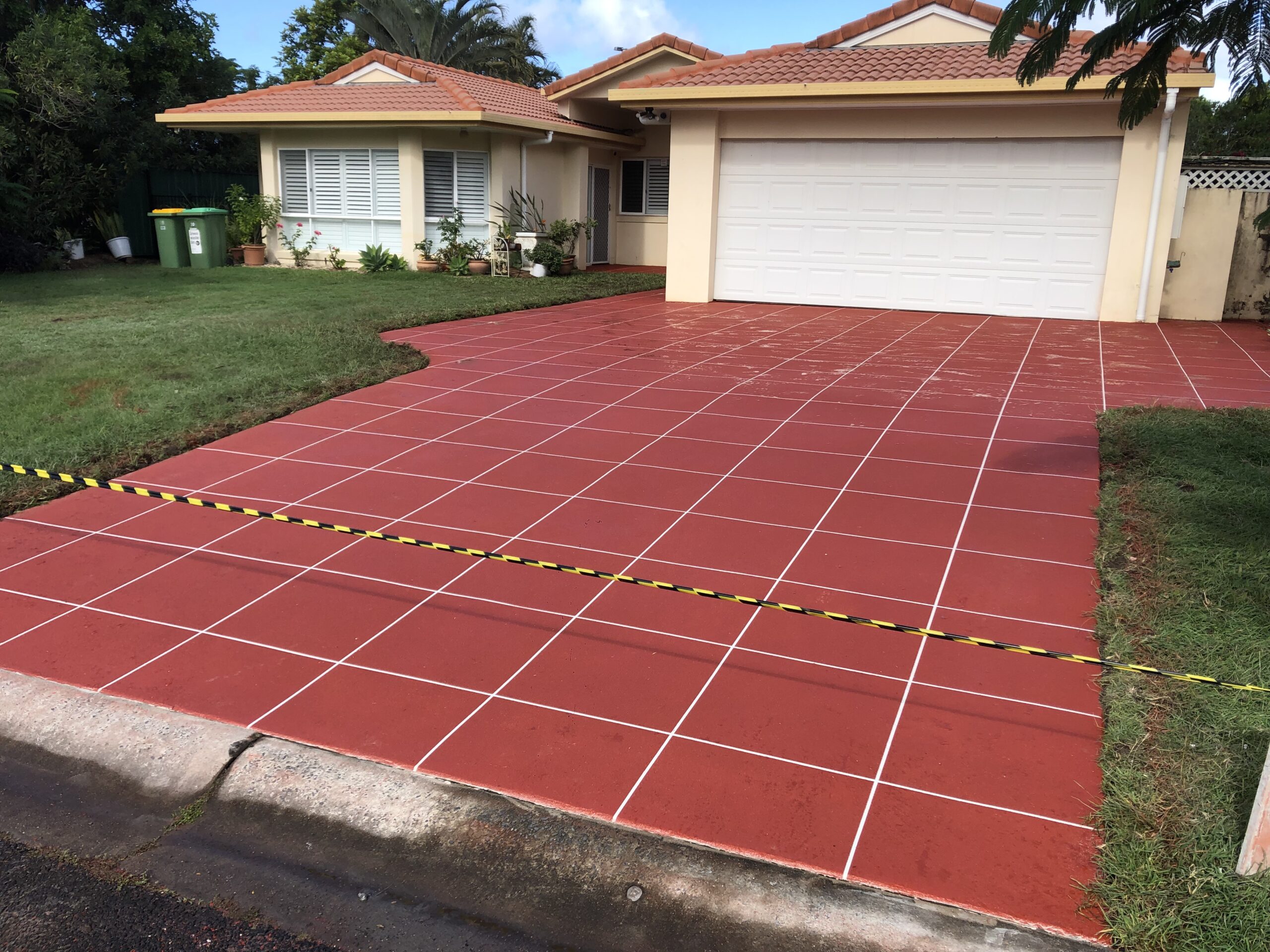
- Cementitious overlay: covers the stone with a new decorative surface
- New exposed aggregate topping: a fresh stone surface bonded on top
If the slab is cracked through with a step, sinking, or lifted by roots, resurfacing won’t last. That section needs replacing.
Start Here: What’s Actually Wrong With Your Exposed Aggregate?
The right fix depends on the cause, not on how bad it looks. Match what you’re seeing to the table below.
| What you see | Likely cause | Usual fix | Resurfaceable? |
|---|---|---|---|
| Dull, faded, grey and dusty | Sealer worn away by UV and traffic | Clean and reseal | Yes, easiest |
| White, milky or cloudy patches | Moisture trapped under solvent sealer (blushing), or acid residue | Re-wet the sealer with solvent, or strip and reseal | Yes |
| Peeling or flaking sealer | Sealer too thick, or incompatible with the coat underneath | Strip and reseal | Yes |
| Black or green spots in shady areas | Mould and algae in humid conditions | Treat, clean and reseal | Yes |
| Loose stones, sandy surface, small holes | Stone exposed too deeply, washed off too early, or worn down by repeated acid washing | Spot repair and reseal. If it’s widespread, an overlay, topping or replacement | Partly |
| Fine hairline cracks that aren’t moving | Normal shrinkage | Fill, blend and reseal | Yes, though cracks may still show |
| Rust-brown spots or straight-line cracks | Mesh too close to the surface and corroding. Sometimes iron in bore water or fertiliser instead | Assess first. Repair the steel, not just the surface | Depends |
| Cracks with a step, sinking, root lifting | Movement in the ground or sub-base | Replace the affected section | No |
Water test: splash some water on the surface. If it beads, the sealer is still working. If it soaks in and darkens straight away, the sealer is gone.
Coin test: drag a coin firmly along the edges of a few stones. If stones rock, or the paste between them crumbles, the surface is breaking down.
Level test: run a straightedge or spirit level across any crack. A step you can feel means the slab has moved.
The 6 Ways to Resurface Exposed Aggregate
1. Deep clean and reseal
Best for: sound exposed aggregate that looks dull, faded, stained or grey. That’s most driveways more than about five years old.
The surface is degreased and cleaned, mould is treated, any blush or loose sealer is removed, and a light acid etch is applied only where the new sealer needs it to bond. Then it’s resealed. Getting the wet-look colour back is mostly about the sealer: a good one restores the depth of the stone colour almost completely. Our step-by-step guide to resealing a concrete driveway covers sealer types and common mistakes.
Can’t fix: loose stone, cracks or movement. Lasts: roughly 3–5 years before the next reseal.
2. Strip and reseal
Best for: white or cloudy patches (blushing), peeling sealer, or a patchy build-up from years of over-coating.
Gold Coast humidity is a common cause of blushing. Moisture gets trapped under a solvent-based acrylic sealer and turns it milky. Mild cases can sometimes be cleared by re-wetting the sealer with solvent so the moisture escapes. Peeling, thick or incompatible sealer has to be stripped back to bare concrete before resealing. Putting a water-based sealer over a solvent-based one, or the reverse, is a common cause of peeling.
Not sure which sealer you have? A common trade test is to wipe a small hidden area with a rag dampened in xylene. Solvent-based acrylic sealers soften and go tacky. Most water-based sealers don’t. Wear gloves, ventilate the area, and keep the solvent off plants and out of drains.
3. Spot repairs: loose stones and cracks
Best for: isolated popped stones, small holes, chipped edges and stable cracks on an otherwise sound slab.
Holes are cleaned out, primed and filled with a polymer-modified repair mortar. Matching stone is pressed into the surface, then exposed and sealed. Stable cracks are routed out, filled with a flexible or epoxy filler, and blended in with stone or sand. A good repair blends in well, but it won’t be invisible, because the surrounding surface has weathered. Cracks that are still moving will reopen whatever you fill them with. Our concrete repairs page explains how we tell the difference.
4. Grind and hone
Best for: owners who want a smoother, contemporary look on a sound slab, and who accept the surface will look completely different.
Diamond grinding cuts the stones flat to show them in cross-section, a bit like terrazzo. It removes the texture that gives exposed aggregate its grip, so a honed surface is much smoother underfoot. That’s fine undercover, but it’s a poor choice for sloping driveways or anywhere wet and barefoot. Around pools, Standards Australia’s SA HB 198 recommends a minimum P4 wet slip rating. A smooth hone is unlikely to meet that without an anti-slip treatment.
5. Cementitious overlay (spray-on or trowelled)
Best for: sound slabs where you’re happy to cover the stone and change the look completely, for example to a plain, coloured, stencilled or textured finish.
The surface is ground and primed. A polymer-modified cement overlay is then applied a few millimetres thick, filling the texture between the stones, and finished and sealed. Done properly, on well-prepared concrete, it’s a durable new surface. It is no longer exposed aggregate, though, and any cracks or joints in the slab underneath will come back through the overlay unless they’re treated and carried through it. Our guide to polymer-modified concrete overlays goes deeper.
6. New exposed aggregate topping
Best for: sound slabs where you want an exposed aggregate look again, whether a fresh stone, a new colour or a uniform finish over a patchwork of repairs.
There are two approaches. Thin seeded toppings are polymer-modified mortar with small stone, about a centimetre thick. Bonded concrete toppings are thicker, typically somewhere around 25–50 mm. Both raise your finished level. That’s the catch most people find out too late:
- Garage doors and thresholds may no longer close or seal properly
- Drainage falls change, and water can end up running towards the house
- The council crossover may need changing to meet the new level, which needs City approval
- Existing joints and cracks have to be carried up through the topping, or they reappear as cracks
Once a topping approaches the cost of a new slab, replacing the slab is often the better long-term buy.
The “Embedment Budget”: Why Acid Washing Every Year Ruins Exposed Aggregate
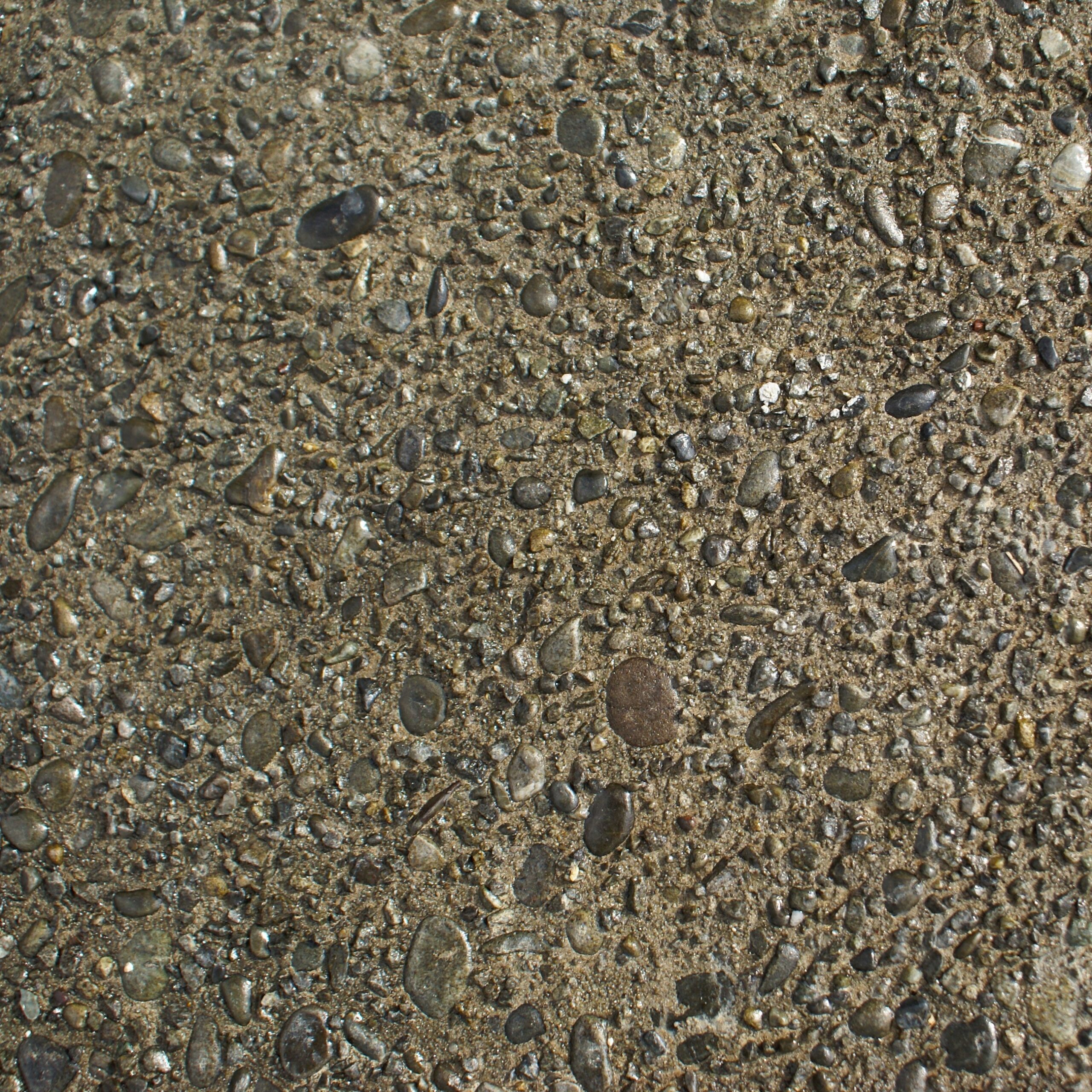
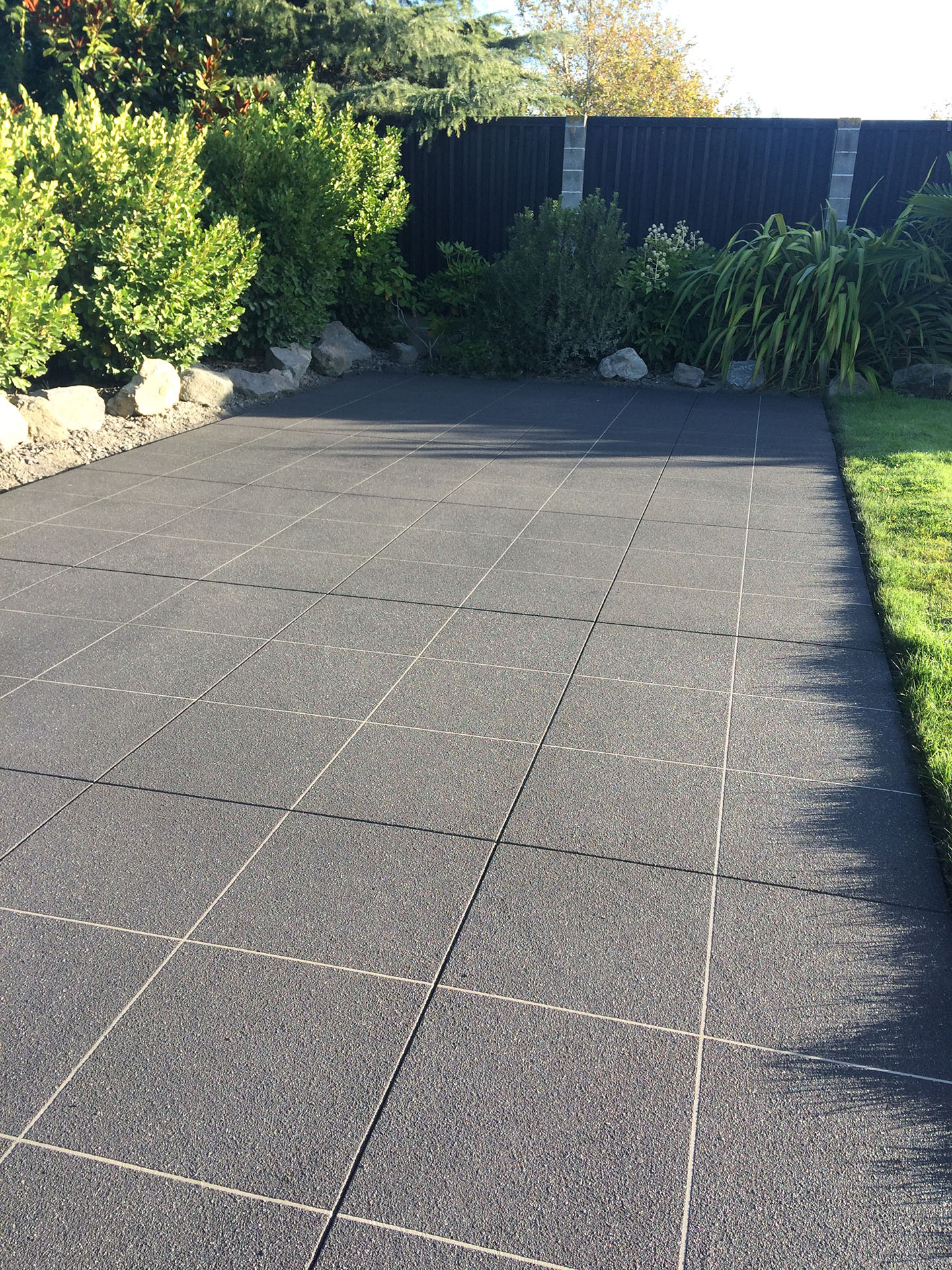
This is the part most guides leave out. Exposed aggregate holds its stones the way a gum holds teeth. On a well-built slab, each stone sits mostly buried in cement paste, with only the top showing.
Industry guidance is that exposure shouldn’t go past about one-third of the stone’s diameter. Brisbane City Council’s standard drawing for exposed aggregate paths specifies that each stone stays embedded by 60–80% of its size. You can read it in their BSD-5212 path detail.
Every strong acid wash, every aggressive strip and every pass with a pressure-washer tip held too close takes away a little more of that paste. One acid wash is fine. One every year for a decade, and the stones are sitting proud and start popping out.
Treat the cement paste between the stones as a budget you can’t top up. Acid etch only when a new sealer needs it to bond, use it weak, neutralise it, and keep it out of the stormwater drain. If an exposed aggregate driveway needs acid every year to look good, the sealer is the real problem.
Gold Coast Conditions That Change the Answer
Resurfacing Options Compared
| Option | Keeps the exposed aggregate look? | Relative cost | Typical life before next work | DIY-friendly? |
|---|---|---|---|---|
| Clean & reseal | Yes, restores it | $ | 3–5 years | Possible, with the right sealer |
| Strip & reseal | Yes | $$ | 3–5 years | Not recommended |
| Spot repairs | Mostly, repairs may show | $–$$ | Varies | Small holes only |
| Grind & hone | No, smooth and flat | $$$ | Long, if sealed and maintained | No |
| Cementitious overlay | No, covers the stone | $$–$$$ (spray-on systems are often ~$50–$80/m²) | Long, if prep is right | No |
| New exposed aggregate topping | Yes, a new stone surface | $$$–$$$$ | Long | No |
| Replace the slab | Yes, new | $$$$ (~$120–$200/m² for exposed aggregate) | 30+ years | No |
Not sure which row is yours? Send us three photos and we’ll tell you.
Send PhotosWhen You Shouldn’t Resurface: Replace Instead
Resurfacing fixes the surface. It can’t fix a slab that’s moving. Replace the affected section if you see:
- Cracks with a step you can feel, or cracks that keep getting wider
- Sinking, rocking slabs, or water pooling where it never used to
- Tree roots lifting the concrete
- Stone loss across most of the surface, not just in patches
- A resurfacing quote that’s close to the cost of a new slab
If you’re weighing the two, our guide to driveway resurfacing vs replacement walks through the decision. When it’s time for new concrete, see our exposed aggregate concrete service.


Can You Resurface Exposed Aggregate Yourself?
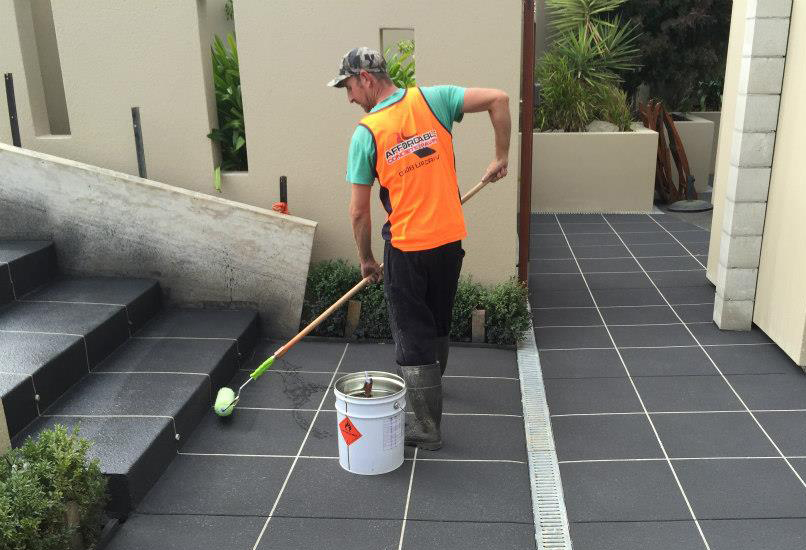
A clean and reseal is a reasonable DIY job if you choose a sealer compatible with the one already there, pick a dry weather window, and keep acid and sealer runoff out of the stormwater drain. Stripping, repairs, honing, overlays and toppings need professional equipment, and they’re easy to get wrong in ways that cost more to fix than to do properly. That work is covered by our concrete resurfacing service. The most common DIY failures we’re called out to are white blushing from sealing on a humid day, and peeling from putting the wrong type of sealer over the old one.
Exposed Aggregate Resurfacing FAQs
Can you put exposed aggregate over existing concrete?
Yes, with a bonded exposed aggregate topping, either a thin seeded mortar about a centimetre thick or a thicker concrete topping of roughly 25–50 mm. The existing slab must be sound. The topping raises the finished level, which can affect garage doors, drainage falls and the council crossover, and existing joints must be carried through the topping or they’ll crack through.
How often should exposed aggregate be resealed on the Gold Coast?
Typically every 3–5 years. Beachfront properties, pool surrounds and north-facing driveways in full sun are at the shorter end. Sealer that no longer beads water is the sign it’s time.
Why has my exposed aggregate gone white after sealing?
Usually it’s blushing: moisture trapped under a solvent-based acrylic sealer, common when sealing in humid weather or on a slab that wasn’t fully dry. Mild blushing can often be cleared by re-wetting the sealer with solvent. Severe cases need stripping and resealing in dry conditions.
Can exposed aggregate be painted?
It’s not recommended. Paint sits on the stone tips, wears through quickly under tyres, and peels in Gold Coast sun and moisture. If you want a colour change, a tinted sealer or a cementitious overlay lasts far longer.
Can exposed aggregate be polished or honed?
Yes. Diamond grinding cuts the stones flat for a smooth, terrazzo-like finish. It removes most of the surface grip, so it suits undercover areas better than sloping driveways or wet barefoot areas. Around pools, SA HB 198 recommends a minimum P4 wet slip rating.
Is it OK to acid wash exposed aggregate?
Occasionally, and only weak and neutralised, mainly to help a new sealer bond. Repeated or strong acid washing dissolves the cement paste holding the stones in. Over time that leaves stones sitting proud and popping out. Keep acid runoff out of the stormwater drain.
How much does it cost to resurface exposed aggregate?
It depends on which option you need. A clean and reseal costs a small fraction of replacement. Spray-on cementitious overlays are often around $50–$80 per m². New exposed aggregate typically costs around $120–$200 per m² on the Gold Coast. Send us photos and we’ll tell you which option your surface needs before you pay for anything.
Not Sure What Your Exposed Aggregate Needs?
Send OSM Concrete three photos and we’ll tell you plainly whether it needs a reseal, repairs, a new surface or replacement, before you spend a dollar. The more useful the photos, the better our answer:
- One wide shot of the whole area
- One close-up with a coin in frame for scale
- One of the worst crack, stain or bare patch
Monday to Friday, 8am–4pm · Parkwood, Gold Coast QLD 4214 · 5.0★ Google rating from 74 reviews