

Concrete Finishes | Exposed Aggregate Colour Selection | Gold Coast
Exposed aggregate is one of the most durable and popular driveway finishes on the Gold Coast, and most of its final appearance comes down to two decisions people usually make separately when they should be making them together: the colour of the stone, and the colour of the cement paste holding it. Get the pairing right and it’s one of the best-performing finishes available. Choose a colour off a small indoor sample and skip the rest of this guide, and you risk a driveway that looks nothing like what you pictured.
This guide covers aggregate colour vs oxide colour, stone size and density, wet vs dry appearance, sealing, natural batch variation, matching a palette to your home and landscaping, and why samples are never an exact match. See our concrete repairs page if you’re dealing with an existing exposed aggregate surface that’s damaged rather than simply due for a refresh.
How do you choose an exposed aggregate colour?
Choose the aggregate colour and the oxide (cement) colour together, not separately, since the finished look is a blend of both. View samples both wet and dry, since sealed aggregate reads noticeably darker and more saturated than dry, unsealed stone. Factor in what’s already fixed on the property, such as roofline, render and garage doors, before locking anything in, and expect natural variation between batches as a feature of a stone-based finish, not a defect.
Aggregate Colour vs Oxide Colour: Two Different Decisions, One Result
This is the distinction that causes the most disappointment with exposed aggregate, and it’s worth understanding properly before looking at a single sample.
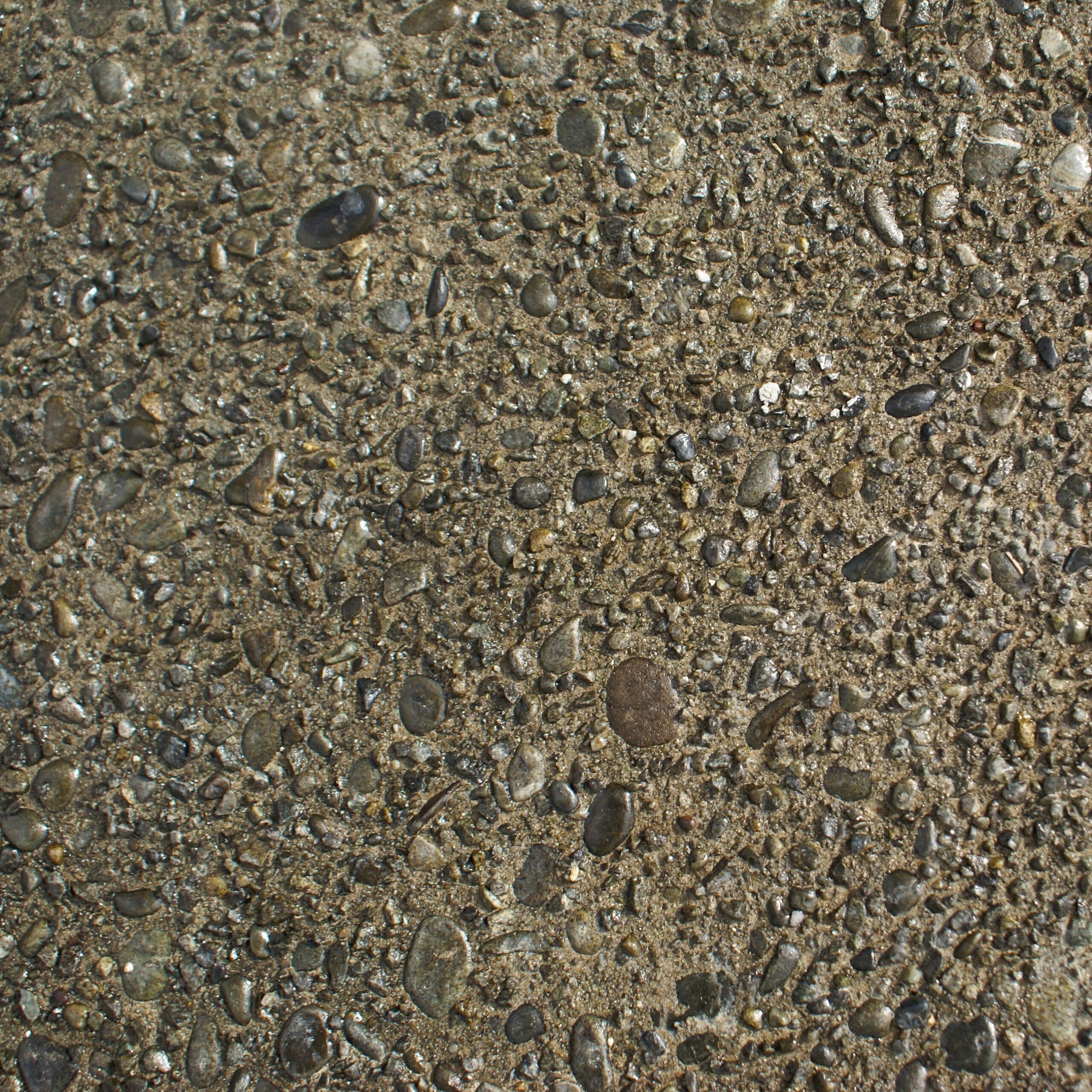
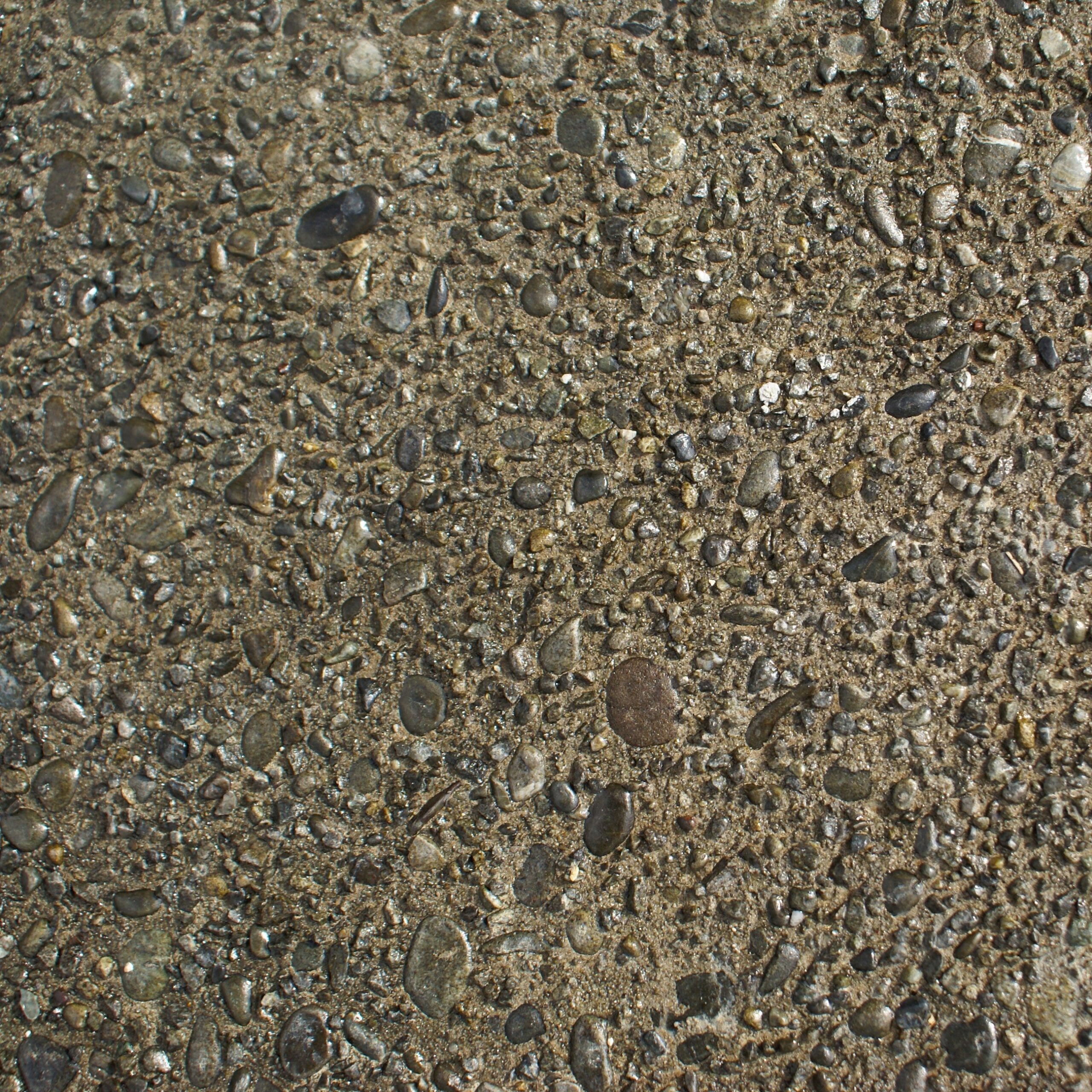
Aggregate colour is the natural colour of the coarse stone mixed into the concrete, the pebbles, gravel or crushed rock that gets exposed once the surface cement is washed or ground back. This comes from the quarry the stone was sourced from. Coarse aggregate is sold in a genuine spectrum of stone types, including river gravel, granite, basalt, quartz, feldspar and marble chip, each with its own natural colour range. Suppliers such as Boral’s Exposé aggregate range tailor their mixes to regionally sourced stone, which is why the palette available in South East Queensland differs from what’s on offer in Victoria or Western Australia.
Oxide colour (also called integral colour) is a mineral pigment blended into the cement paste itself, the matrix binding the stone together. This is what shows in the gaps between the exposed stones once the surface is washed back. Ranges like Boral’s Colori oxide system permeate the full depth of the pour rather than sitting on top of it, which is why integral colour doesn’t flake or wear away the way a surface-applied stain can.
Why this matters in practice: the finished surface is always a blend of both. A warm gold aggregate against a natural grey oxide reads completely differently to the same stone set against a charcoal or buff oxide matrix. Choosing a stone colour from a sample chip, then deciding on the oxide separately once the quote’s already signed, is how driveways end up looking nothing like the display board.
Same stone, two completely different driveways
Take a warm gold river-pebble aggregate, a genuinely popular Gold Coast choice. Paired with a natural grey oxide, the finished surface reads warm but understated, with the grey matrix quietening the gold tones between stones. Pair that exact same gold pebble against a charcoal oxide instead, and the contrast flips: the gold stones appear to pop far more strongly, and the overall driveway reads noticeably darker and more dramatic from the street. Same truckload of aggregate. Two visually distinct driveways, depending entirely on the oxide chosen alongside it. This is the pairing decision worth making before a single sample chip gets approved.
Ask to see the oxide colour on its own, as a plain concrete sample with no stone in it, as well as combined with your chosen aggregate. Oxide reads differently depending on how much of it is actually visible in the finished surface, and a heavy exposure with lots of stone will show far less bare oxide than a light exposure. Seeing the oxide in isolation stops you misjudging how strong or subtle it will actually appear once the stone is washed back.
Stone Size and Exposure Density
Two separate physical variables affect how textured and how colour-saturated the finished surface looks: the size of the stone used, and how much of it is exposed at the wash-back stage.
Stone Size
Coarse aggregate for exposed driveways is typically supplied in a small number of standard sizes, most commonly around 7mm, 10mm and 14mm in diameter. Smaller stone gives a finer, more even texture that suits pedestrian areas and pool surrounds where a smoother underfoot feel matters. Larger stone gives a bolder, more rustic character and is often chosen specifically for the visual statement it makes on a driveway, though it also means a rougher surface texture.
Exposure Density
A fine scatter of stone with more cement matrix visible between pieces. Reads smoother and more contemporary, and shows more of the oxide colour.
The most common residential choice on the Gold Coast, a balance of visible stone and matrix.
A dense, pebble-dominant surface with minimal visible matrix. Reads more textured and rustic, and typically offers the strongest slip resistance underfoot.
How exposure is actually controlled on site: a chemical surface retarder is sprayed onto the freshly placed concrete, penetrating roughly the top 5 to 10mm of the cement paste and delaying it from hardening while the body of the slab underneath sets normally. The following day, the retarded surface layer is washed off under pressure, revealing the stone beneath to whatever depth the retarder was designed to reach. Reputable concreters wash off the next day rather than the same day, since same-day washoff on a slab that hasn’t developed enough strength risks dislodging stone and creating an uneven, pitted surface. Getting the retarder coverage even across the whole slab is a skill in itself: thin patches set too fast and under-expose, thick patches stay soft too long and can over-expose or lose stone entirely.
Wet vs Dry Appearance
This catches almost everyone out at least once: exposed aggregate looks noticeably different wet than dry, and most people are shown the wrong one.
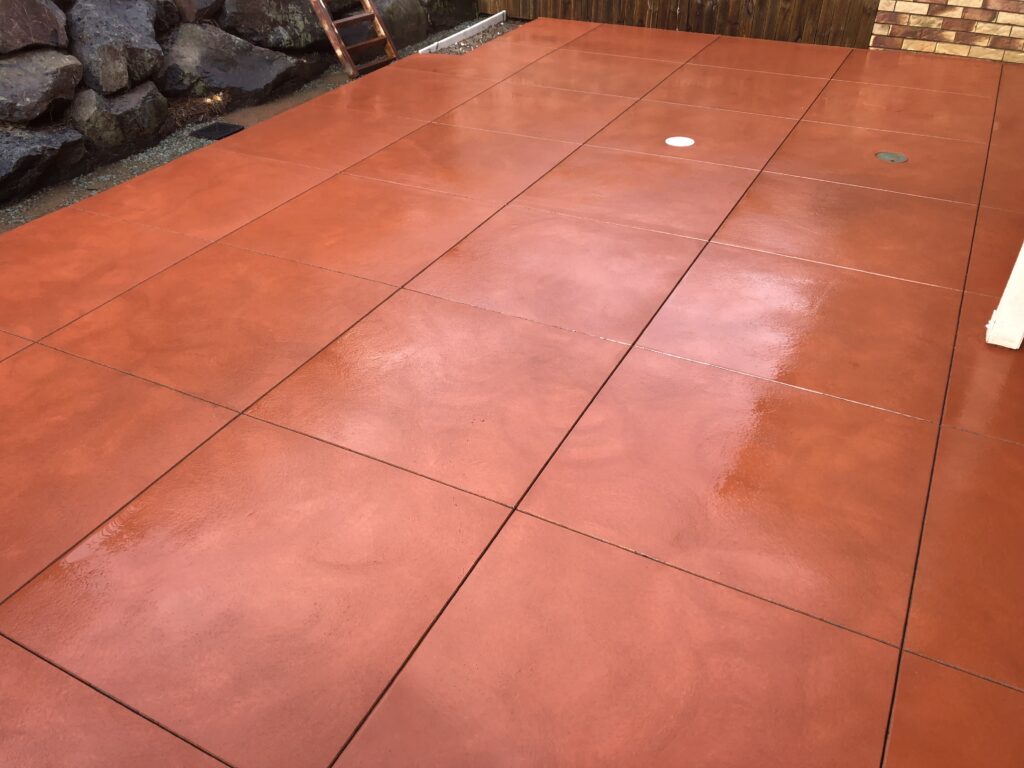
A wet or freshly sealed sample shows deeper, richer, more saturated colour. That’s almost always what’s photographed for a finished-project gallery or shown on a rain-slicked display panel. A dry, unsealed surface looks considerably more muted and lighter by comparison.
If you’re choosing a colour from a photo of a finished driveway, you’re very likely looking at the wet or sealed appearance. Ask to see a dry sample as well, particularly if you won’t be sealing immediately or you’re comparing colours on an overcast day versus full Gold Coast sun.
Sealing, Heat and Long-Term Colour
Sealing exposed aggregate does two jobs at once: it protects the surface, and it restores the saturated wet look of the stone and oxide colour, the same effect that makes wet samples look so different from dry ones. Full detail on sealer types, including the difference between film-forming acrylics and penetrating sealers, is in our guide to resealing a concrete driveway.
- An unsealed surface looks flatter and lighter than a sealed one, even in identical stone and oxide colours
- Sealer wears over time, and as it thins, colour can appear to fade even though the aggregate itself hasn’t changed
- Prolonged UV exposure can slightly mute oxide pigment in the matrix over many years, more noticeably in darker pigments than lighter natural tones
Colour Also Affects Surface Temperature
This is a genuinely practical consideration for pool surrounds and any bare-foot outdoor area, not just an aesthetic footnote. Surface colour changes how much heat a slab absorbs from direct sun.
was the measured difference in peak surface temperature between grey or red coloured pavers and black coloured pavers of the same texture, in a controlled study of pavement colour and urban heat published in the journal Building and Environment. Lighter, more reflective surfaces consistently ran cooler at peak sun exposure than darker ones of an identical material and finish.
New grey cement concrete typically has an albedo (a measure of how much sunlight a surface reflects) in the range of 0.35 to 0.40, while concrete made with white cement and light aggregates can reach albedo values as high as 0.7 or more, according to research summarised by the American Concrete Pavement Association. In practical terms, a light, natural-toned exposed aggregate driveway will run measurably cooler underfoot in summer than a dark charcoal or black equivalent, which is worth factoring in around pools and entertaining areas where people are likely to be walking barefoot.
If long-term colour consistency and underfoot heat both matter to you, raise this before the pour. Some oxide and aggregate combinations perform demonstrably better in Gold Coast sun and salt air than others.
A charcoal pool surround that got too hot to walk on
A homeowner chose a striking black basalt aggregate with a charcoal oxide for a pool surround purely on how it looked in a project photo, taken on an overcast day with the surface wet. Once installed and sealed, the area looked exactly as intended, but became genuinely too hot to walk on barefoot by early afternoon through summer, to the point where the family avoided using that side of the pool entirely.
The solution: this isn’t something that can be fixed after the pour without resurfacing, which is why it’s worth raising at the colour selection stage rather than after the event. For pool surrounds and other bare-foot areas, we now walk clients through the heat implications of dark aggregate choices upfront, and often suggest keeping darker tones for driveway sections while using lighter, natural stone around the immediate pool edge.
Natural Variation Is a Feature, Not a Defect
Exposed aggregate is a natural material, and no two batches, bags or truckloads of stone are perfectly identical, a point most reputable decorative concrete suppliers state plainly in their own product literature. Boral, for instance, notes that its decorative concrete products contain aggregates sourced from natural quarry material, and that some batch-to-batch variation in appearance should be expected.
This isn’t a quality issue. It’s the nature of a stone-based finish, and it’s part of why exposed aggregate looks less uniform, and often more attractive, than a plain, single-colour concrete surface. If you’re extending an existing exposed aggregate area or matching a neighbouring section, expect some visible variation between old and new sections even with the same stone and oxide ordered, due to differences in quarry batches, cement batches and weather during placement.
Matching Your Home and Landscaping
| Home style | Aggregate tone that typically suits | Practical note |
|---|---|---|
| Coastal / modern render | Natural creams, sandstones, light greys | Reads clean against glass, render and coastal landscaping; lighter tones also reflect more heat |
| Contemporary dark facade | Charcoal, black basalt blends | Strong contrast against dark roofing and aluminium, but runs hotter in direct sun and shows dust, pollen and water spotting more visibly |
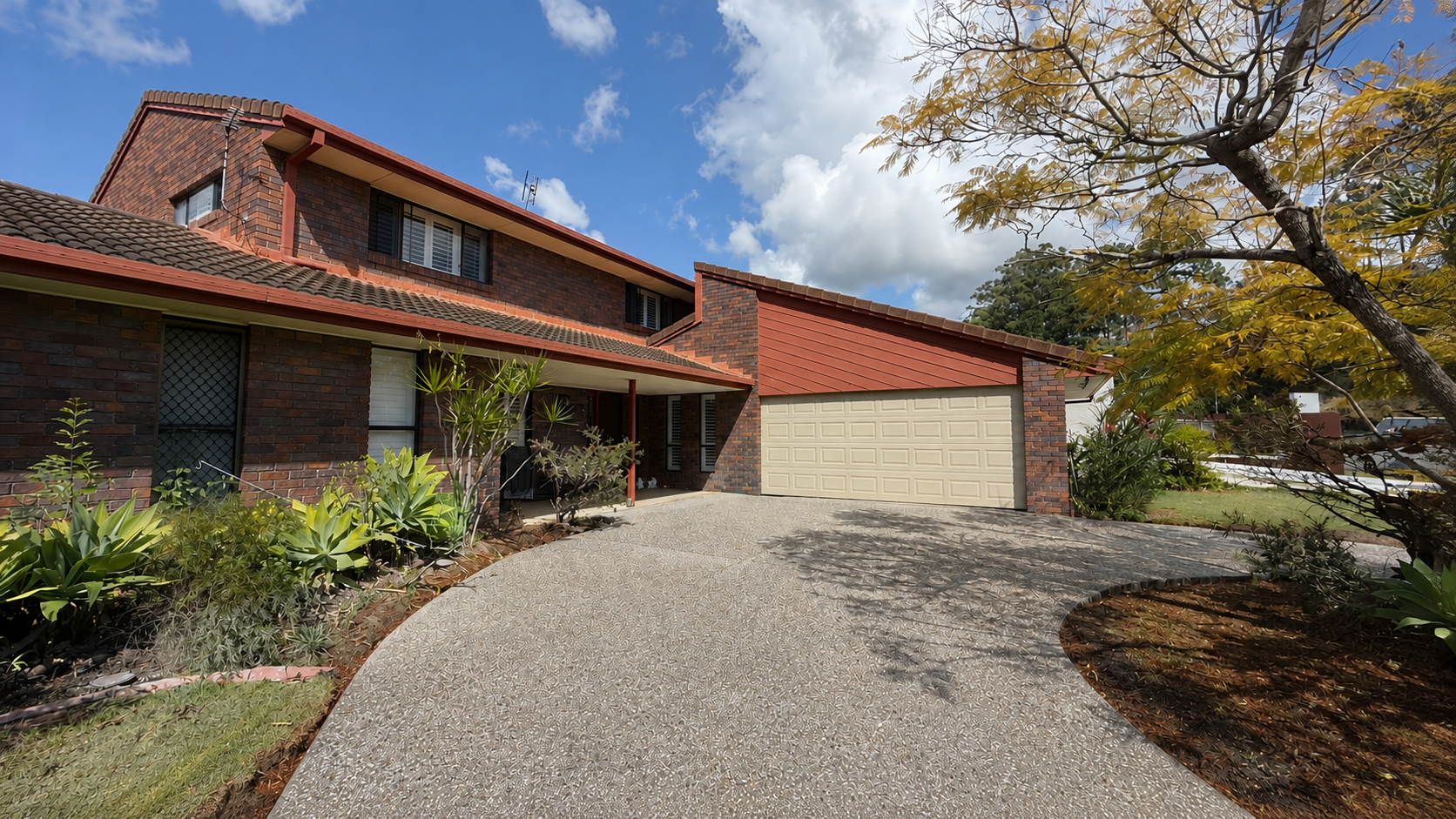
| Established gardens, brick homes | Warm gold, river-pebble blends | Hides everyday surface dirt better than very light or very dark options |
Before locking in a stone and oxide combination, consider what’s already fixed and expensive to change on the property, such as roof colour, render, existing paving and garage doors, rather than choosing the aggregate first and working backwards.
Photograph the sample against your actual roofline, render or fence, not on its own. Colour perception is heavily relative. A stone that looks warm and gold next to a plain white wall can suddenly look pale and washed out once it’s sitting next to the actual brick, render or timber tones on your property. A five-minute phone photo against the real backdrop tells you more than staring at the sample chip in isolation.
Why Samples Aren’t an Exact Match
It’s worth setting this expectation before the pour rather than after: a small sample chip, viewed indoors under artificial light, will never look identical to a full driveway viewed outdoors in Gold Coast sun. Scale, lighting, moisture, sealing and the surrounding environment all affect how a colour reads. The most reliable way to reduce surprises is to view samples outdoors, in similar light to where the finished concrete will actually sit, and to ask for both a wet and a dry version of the same sample.
For the finish options available on new pours and resurfacing alike, see our full range of concrete finishes, or read our guide to exposed aggregate resurfacing if you’re refreshing an existing surface rather than starting with a new pour. If your existing exposed aggregate has damage, cracking or spalling rather than just a tired colour, our concrete repairs guide covers how to tell the difference between a colour refresh and a genuine repair.
Exposed Aggregate Colour FAQs
What’s the difference between aggregate colour and oxide colour?
Aggregate colour is the natural colour of the stone mixed into the concrete. Oxide (integral) colour is a pigment added to the cement paste that shows in the matrix between the stones. The finished look is a combination of both, so they should be chosen together.
Why does my exposed aggregate look different wet than dry?
Wet or sealed aggregate shows deeper, more saturated colour than dry, unsealed aggregate. Sample boards and finished project photos are usually shown wet or freshly sealed, which is worth allowing for when choosing a colour.
Does exposed aggregate colour affect surface temperature?
Yes. Darker aggregate and oxide combinations absorb more solar radiation and can run noticeably hotter underfoot in direct sun than lighter, natural stone tones, which reflect more heat. Studies of pavement colour have measured several degrees of difference in peak surface temperature between light and dark finishes of the same material. This is worth considering for pool surrounds and bare-foot outdoor areas.
Can I match new exposed aggregate to an existing driveway?
Reasonably closely, using the same stone and oxide colour, but some natural variation between the original and new sections is normal due to differences in quarry batches, cement batches and weather conditions during placement.
Does exposed aggregate fade over time?
The stone itself is very stable, but oxide colour in the matrix can mute slightly with prolonged UV exposure, and unsealed surfaces will look flatter over time as the surface wears. Resealing restores much of the original depth of colour.
What exposed aggregate colours suit coastal Gold Coast homes?
Lighter, natural stone tones such as creams, sandstones and light greys are popular for coastal and modern Gold Coast homes, though the right choice depends on roofing, render, landscaping and personal preference.
What stone size is used for exposed aggregate driveways?
Coarse aggregate for driveways is commonly supplied around 7mm, 10mm or 14mm in diameter. Smaller stone gives a finer, smoother texture suited to pedestrian areas and pool surrounds, while larger stone gives a bolder, more textured character on driveways.
Choosing a Stone and Oxide Combination for Your Driveway?
Send OSM Concrete a few photos of your property, including roofline, render and existing paving, and we’ll talk you through stone and oxide combinations that suit the site, not just what looks good on a sample board.
Request a Site Assessment