

Commercial Concrete Repairs & Replacement | Gold Coast
A failing concrete car park does not automatically need to be demolished. The right solution depends on what has failed. A stable slab with a worn surface may be suitable for resurfacing. One damaged joint or local defect may only need repair. Concrete that is sinking, moving, breaking apart or continually holding water may need partial or full-depth replacement.
For a commercial property owner, strata committee or facility manager, that distinction matters. Replacing sound concrete wastes capital, but repeatedly patching concrete that has failed underneath can be just as expensive.
OSM Concrete works across commercial concrete, civil concrete, resurfacing and repairs, concrete replacement and strata concrete maintenance throughout the Gold Coast. This guide explains how to tell the difference between a surface problem and a pavement problem before money is spent on the wrong treatment.
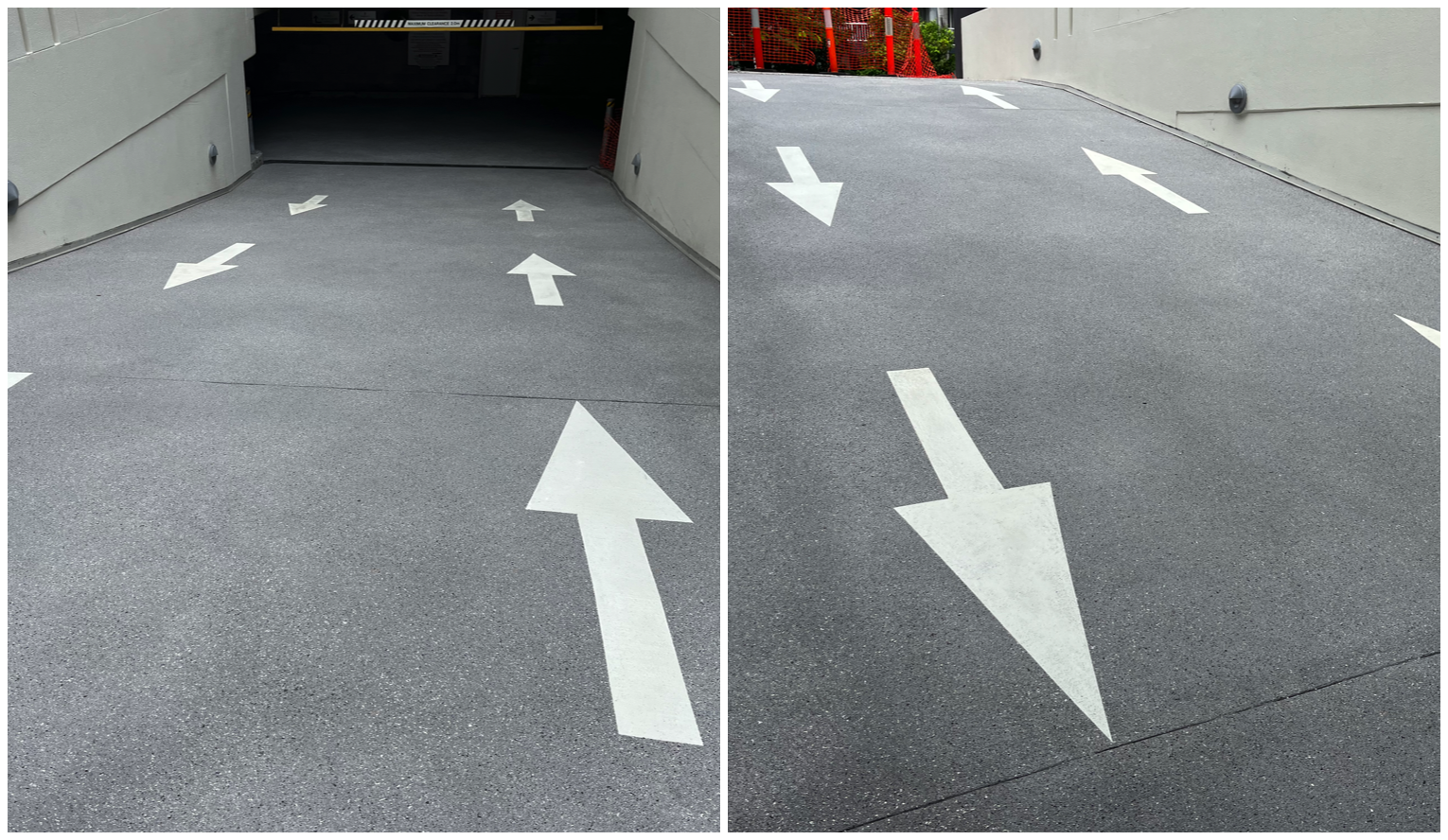
When should a concrete car park be repaired, resurfaced or replaced?
Repair a concrete car park when damage is isolated and the surrounding concrete remains stable. Resurface it when the slab is sound but its wearing surface has become worn, faded, slippery or visually inconsistent. Replace or rebuild the affected concrete when there is movement, settlement, widespread fracture, failed support, incorrect levels or a recurring drainage problem.
The condition underneath the visible surface is more important than how old the car park looks.
Start With What the Car Park Is Doing, Not What It Looks Like
One of the most useful things a property owner can do is describe the behaviour of the concrete rather than trying to diagnose it.
For example, tell the contractor that water remains in three visitor bays after rain, that the concrete beside the bin enclosure has been patched twice and cracked again, or that there is a noticeable step between two slabs near the entry. Those observations provide much more information than saying the concrete is “old” or asking for a resurfacing price.
Property-owner rule: before deciding on a treatment, ask whether the problem is in the surface, in the slab itself, or underneath the slab. Resurfacing addresses the surface. A repair addresses a defined defect. Replacement gives access to reconstruct a failed pavement section and, where required, the support beneath it.
What Do Different Car Park Problems Usually Point To?
The following is not a substitute for inspecting the site, but it is a useful way to narrow down the likely scope before requesting a quote.
Stable slab + surface deterioration = consider resurfacing.
Stable surrounding concrete + isolated defect = consider repair.
Movement, settlement, failed levels or failed support = investigate replacement.
When Is a Local Concrete Car Park Repair the Right Choice?
A local repair makes sense when the problem has a clear boundary and the surrounding pavement remains worth keeping.
That could include a damaged joint edge, a localised broken area, impact damage or a small failed section where unsound concrete can be removed back to a stable substrate.
Imagine a commercial property in Southport where one joint across a vehicle aisle has started breaking away but the slabs on both sides remain level. Removing hundreds of square metres of otherwise serviceable pavement would be difficult to justify.
In that situation, a properly prepared local repair may offer much better value.
Fast-return repair systems can also reduce downtime. Fosroc Renderoc Rapid is an Australian pavement repair product designed for localised floor, pavement and joint repairs between 25mm and 250mm deep. Fosroc states that it can accept traffic in approximately one to two hours under the nominated product conditions.
That does not mean every Gold Coast car park repair should use the same product. It demonstrates why commercial repair specifications can be very different from a basic cosmetic patch.
When Is Concrete Car Park Resurfacing the Better Option?
Resurfacing is most useful when the slab underneath remains stable but the surface has reached the point where continued patching, cleaning or cosmetic maintenance is no longer achieving a good result.
The concrete might be faded, worn from turning traffic, visually inconsistent after years of small repairs, stained or generally tired. There may be isolated defects that can be repaired first, but the pavement as a whole still has useful life.
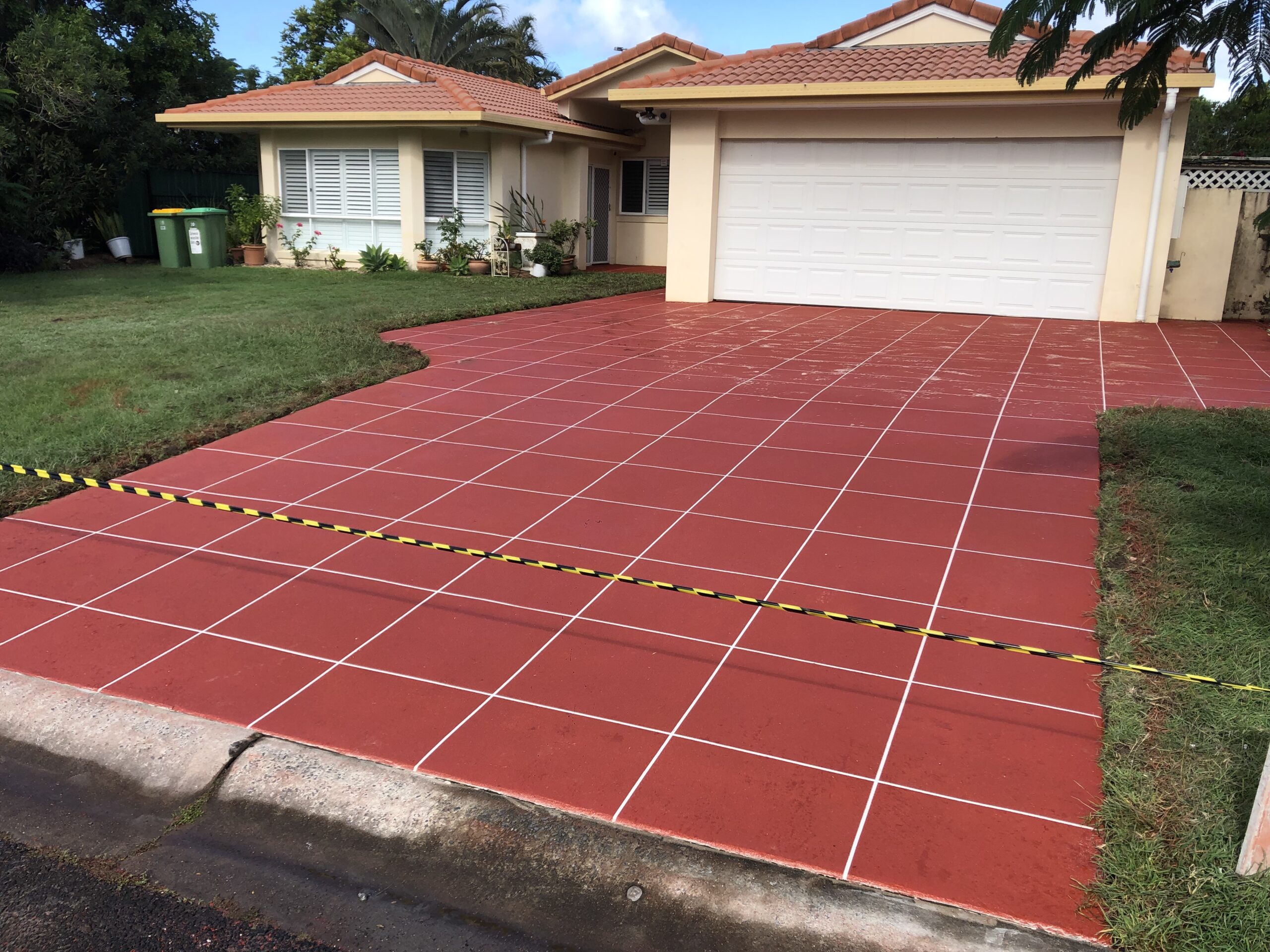
In this situation, commercial concrete resurfacing can preserve the existing slab while providing a renewed surface.
OSM works with polymer-modified cement-based resurfacing systems over suitable existing concrete. Car park surfaces, access areas, strata sites, commercial properties and other high-use areas are all examples where resurfacing can be considered when the substrate remains suitable.
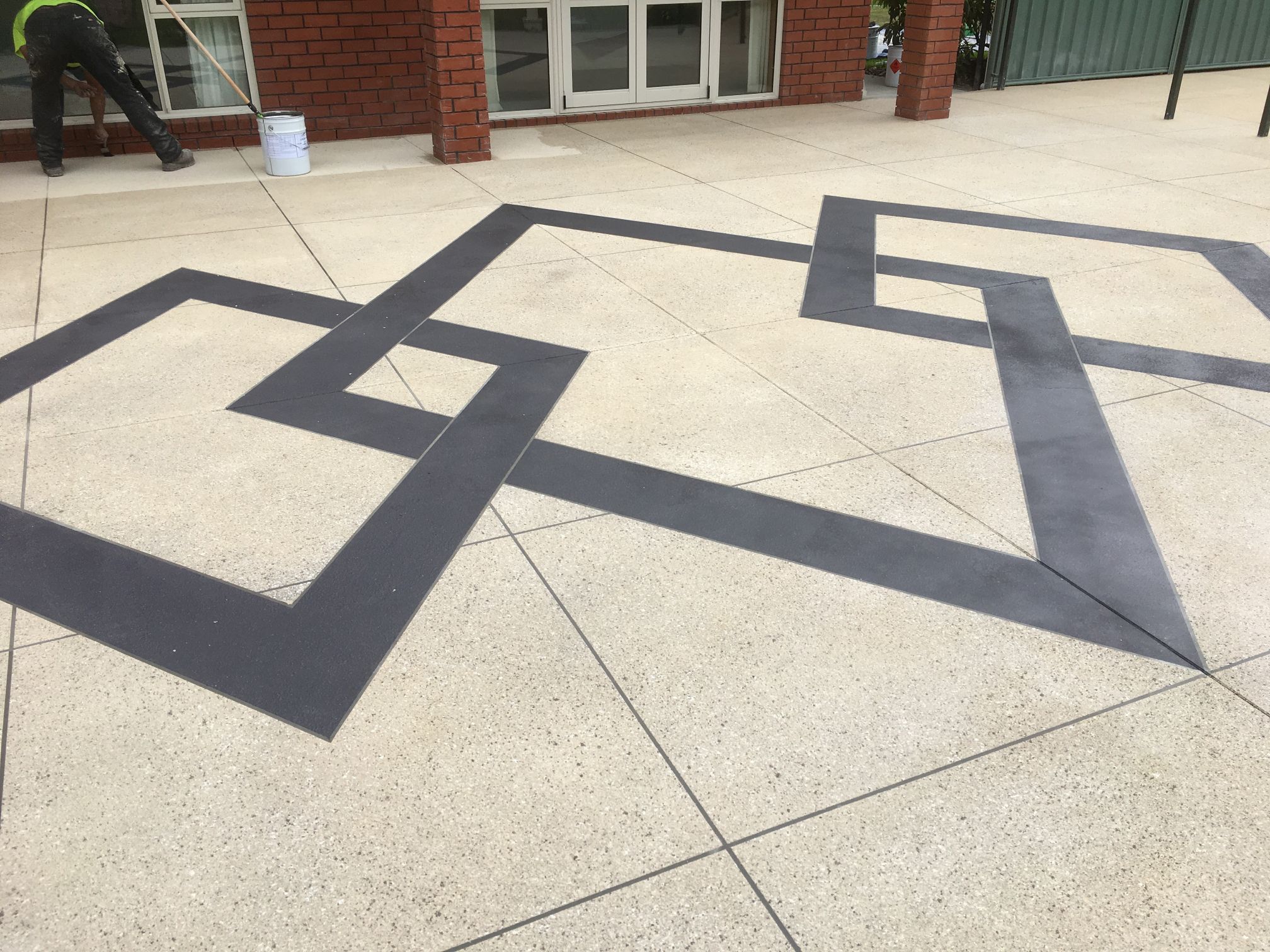
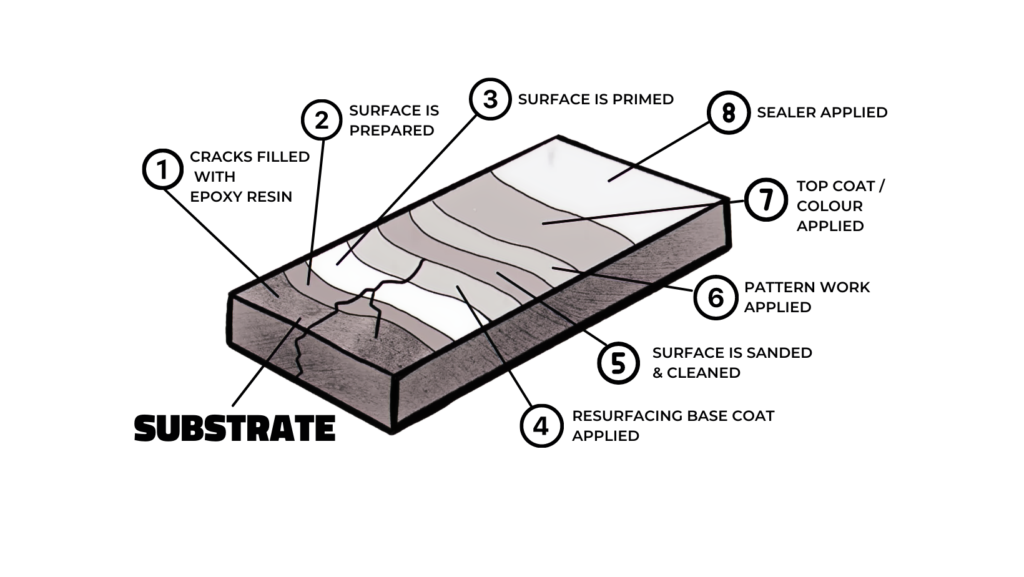
If the existing surface disappeared tomorrow, would the slab underneath still be level, stable and suitable for vehicle traffic? If yes, resurfacing may be worth investigating. If no, a new surface is unlikely to solve the real problem.
Why Resurfacing Is Not Simply “Painting the Car Park”
Property owners can receive quotes for very different systems that all appear to fall under the words coating or resurfacing.
A polymer-modified cementitious overlay, a thin trafficable cement topping, a resin floor coating and a protective sealer are different systems. They have different thicknesses, preparation requirements, surface characteristics and intended uses.
The treatment should therefore be selected after understanding the substrate and traffic rather than choosing a finish first.
This becomes particularly important through vehicle turning zones, ramps, entrances, service areas and other locations where the surface experiences more demanding traffic than an ordinary pedestrian area.
When Does Concrete Car Park Replacement Make More Sense?
Replacement becomes the stronger option when retaining the existing slab would also retain the reason it is failing.
Severe sinking, lifting, badly fractured concrete, recurring movement, failed support and incorrect levels all shift the decision away from simply renewing the visible surface.
The advantage of replacement is not simply that new concrete goes back in.
Once a failed section is removed, the contractor can inspect the area below it, deal with unsuitable support where required, reconstruct the pavement zone, establish useful falls and connect the new work to surrounding concrete that remains serviceable.
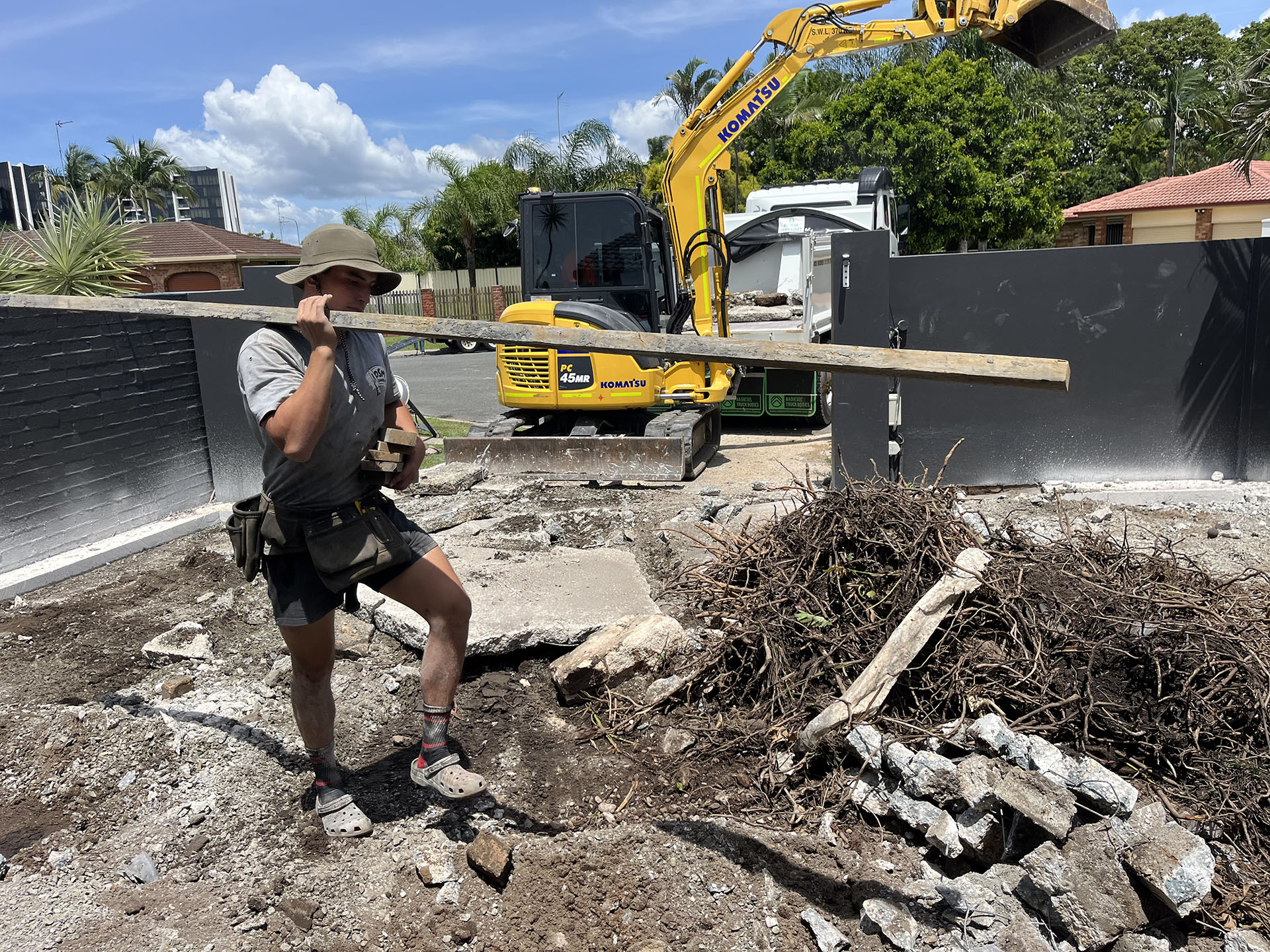
Replacement Does Not Necessarily Mean Rebuilding the Whole Car Park
This is one of the most important points for a property owner budgeting for remedial work.
A car park does not have to be treated as one giant slab.
One entry apron may have failed while most parking bays remain sound. A bin-truck route may be breaking up while passenger-vehicle areas are still serviceable. A row of slabs beside a drainage line may have settled while the opposite side of the site remains level.
In cases like these, a hybrid scope can make better commercial sense: retain sound pavement, repair genuinely local defects, resurface stable worn areas if needed, and replace only the sections where the deeper pavement has failed.
Problem: Water Sits in the Same Parking Bays After Rain
Do not assume the first solution is resurfacing.
Recurring ponding is useful diagnostic information because it shows how the pavement levels and drainage are behaving.
If water repeatedly remains beside a drainage pit, across a pedestrian path or in the same group of parking bays, the first question should be where the water is supposed to go and why it is not getting there.
The assessment may need to consider the height of pits, slab falls, adjoining kerbs, transitions between pavement areas, previous repairs and whether part of the car park has settled.
Problem: The Same Crack Has Been Patched Twice
A recurring crack should trigger investigation, not automatically another patch.
There is a difference between a failed repair and a repair that is being asked to accommodate continuing pavement movement.
If the crack keeps opening, the slab may still be moving. There may be settlement, loss of support, restraint, movement at a joint or another condition that has not been corrected.
Making the next patch harder does not necessarily stop the surrounding concrete from moving.
Problem: The Bin Truck or Delivery Route Keeps Breaking Up
Look at the traffic pattern before blaming the concrete everywhere.
A normal parking bay and a bin collection route do very different jobs.
Service vehicles can place considerably greater demand on particular pavement zones, especially where vehicles turn, brake or load close to slab edges.
If one route repeatedly deteriorates while ordinary parking bays remain in acceptable condition, the failure pattern itself is useful evidence.
Problem: One Concrete Panel Has Sunk
A vertical step is more significant than a surface stain or cosmetic crack.
Where one slab sits noticeably lower than the next, there has been a change in level. The important issue is why.
If the slab or material beneath it has settled, applying another layer over the surface does not necessarily address the reason the difference in level developed.
Problem: The Car Park Entry Is Cracking and Breaking Away
Entries often carry more punishment than the quietest parking bays.
Vehicles brake, accelerate and turn near an entry. The concrete may also meet a crossover, road pavement, kerb, drainage channel or older section of work in a relatively small area.
This makes entry aprons one of the locations where looking at only the visible crack can miss the bigger picture.
OSM’s commercial concrete service includes car parks and entry aprons where vehicle use, movement control, drainage, levels and durability all need to be considered together.
Problem: The Concrete Is Sound but the Whole Car Park Looks Tired
This is where resurfacing can deliver more value than demolition.
A commercial car park can reach a point where repeated local patches, surface wear and inconsistent finishes make the property look poorly maintained even though the underlying slabs remain serviceable.
For retail, strata, hospitality and other customer-facing properties, appearance is part of the maintenance decision, but it should not override the technical assessment.
How Much of the Car Park Actually Needs Replacing?
The visible amount of damaged concrete is not always the same as the sensible construction area.
Consider a hypothetical 1,200m² commercial car park. If approximately 180m² around a service lane has failed but the other slabs remain level and stable, the realistic choices are not necessarily “patch 180m²” or “replace all 1,200m²”.
A contractor may be able to establish logical saw-cut boundaries, remove the failed pavement zone, address the cause and tie new work back into concrete that still has useful life.
The reverse is also true. If most of the pavement is fractured, moving and covered in previous repairs, continually finding new boundaries for patches can become false economy.
A low-cost patch that closes a car park for half a day and lasts may be excellent value.
A low-cost patch that has to be repeated every six months may not be.
Commercial owners should consider the repair cost together with access disruption, repeated mobilisation, tenant or resident inconvenience, lost parking capacity and the likelihood of having to revisit the same area.
Downtime Can Change Which Repair Makes Sense
A commercial car park is part of the operation of the property. Closing even a small section can affect residents, customers, employees, deliveries, waste collection and pedestrian movements.
That means construction staging should be considered while the treatment is being selected, not after it has already been specified.
For some localised repairs, specialist rapid-hardening materials can shorten the period before traffic returns. For replacement works, the better solution may be to divide a car park into stages so that one area remains operational while another is demolished, poured and cured.
This becomes especially important on occupied strata sites, schools, retail properties and other locations where safe access has to be maintained around the work.
Why the Site Context Changes Across the Gold Coast
A car park repair in an industrial area and one underneath a busy strata or hospitality property can involve the same concrete principles but very different project constraints.
Commercial buildings, medical premises, apartments, retail and professional properties can make traffic staging, pedestrian access and maintaining visitor parking particularly important.
High-rise strata, accommodation and hospitality sites can add restricted access, constant visitor movement, presentation requirements and coastal exposure.
Commercial and industrial areas can involve service yards, delivery traffic, high-use vehicle access and local drainage considerations alongside customer-facing properties.
Growing commercial areas, newer developments, shared access and construction traffic can create different loading and staging requirements from an established low-traffic site.
Commercial precincts, strata sites and larger access areas can include constant vehicle traffic, shared driveways, stormwater movement and high-use parking environments.
Established properties, ageing infrastructure, mixed site conditions and commercial parking areas make the condition of existing bases and drainage worth checking before resurfacing.
Strata and shared-access properties often require concrete works to be staged around resident vehicles, visitors, pedestrian routes and body corporate communication.
Properties can vary from commercial sites to larger access areas where changing ground levels, stormwater, vehicle loading and site access influence how replacement works are planned.
Repair vs Resurface vs Replace: Concrete Car Park Decision Table
| Car park condition | Repair? | Resurface? | Replace? |
|---|---|---|---|
| One isolated defect with stable surrounding concrete | Often suitable | Usually unnecessary unless wider surface renewal is required | Usually unnecessary |
| Stable but worn or inconsistent surface | Repair isolated defects first | Strong candidate | Usually unnecessary |
| Local joint-edge failure | Often suitable | Possibly afterwards | Consider if deterioration is widespread |
| Persistent ponding caused by a low or settled slab | Limited if levels remain wrong | Depends on geometry | Often worth investigating |
| Sunken or rocking slab | Does not necessarily address failed support | Generally poor candidate while movement remains | Strong candidate |
| Crack repeatedly returns through previous repairs | Only after identifying cause | Avoid if active movement remains | May be appropriate |
| Failure concentrated in loading, bin or service route | Suitable for truly local damage | Possible if underlying pavement remains stable | Consider targeted reconstruction |
| Multiple adjoining slabs fractured, moving or badly patched | Can become false economy | Usually unsuitable | Replacement increasingly makes sense |
What Should a Good Car Park Concrete Assessment Include?
A useful assessment should look at the cause of the failure as well as the visible damage.
For a ground-supported car park, that normally means considering the cracking pattern, slab levels, movement, joints, drainage, traffic routes, previous repairs, pavement edges, access constraints and evidence that the underlying support may have changed.
The contractor also needs to understand how the property operates.
Where can machinery access the failed area? Can one vehicle aisle remain open? When is the bin collection? Is visitor parking required overnight? Where can pedestrians move safely? Can concrete trucks reach the work zone? Is the car park used by ordinary cars, vans or heavier service vehicles?
Those questions help determine not only what should be repaired, but how the repair can realistically be completed.
Ground-Level Car Parks and Multi-Storey Car Parks Require Different Assessments
A ground-supported concrete pavement problem should not automatically be treated the same way as structural deterioration in a suspended parking deck.
The repair, resurfacing and replacement decisions in this guide are primarily aimed at ground-level commercial and strata car parks, entries, accessways, hardstands and associated external concrete.
If concrete in a multi-storey or suspended car park has significant spalling, exposed reinforcing steel, corrosion, structural cracking or deterioration around columns and suspended slabs, specialist remedial and engineering input may be required.
That distinction matters because structural remediation can involve reinforcement condition, concrete cover, corrosion mechanisms, structural capacity and specialist repair systems that go beyond normal ground-supported pavement maintenance.
What Should You Send OSM Before Requesting a Car Park Assessment?
You do not need a technical report before making contact.
A useful enquiry includes the property suburb, several wide photographs, close-up photographs of the damage, an approximate affected area and a short explanation of what is happening.
For example:
“Three visitor bays at our Southport strata property hold water after every decent rain.”
“The slabs along our Coomera bin-truck route have been repaired before and are breaking up again.”
“Our Surfers Paradise visitor car park is still level, but the whole surface is worn and patchy.”
“Concrete at the entrance to our Burleigh commercial property has cracked where delivery vehicles turn.”
This information helps OSM determine whether the site is more likely to need a repair, a resurfacing assessment or investigation for selective replacement before attending.
Concrete Car Park Repair FAQs
Should a cracked concrete car park be repaired or replaced?
A cracked car park can often be repaired if the damage is local and the surrounding slab remains stable. Replacement becomes more likely when cracking is widespread, keeps returning, accompanies settlement or movement, or indicates that the pavement below the surface has failed.
Can an old concrete car park be resurfaced instead of replaced?
Yes. Age alone does not determine whether concrete needs replacement. If the existing slab remains stable and the main problem is surface wear, fading or deterioration, resurfacing may preserve the slab and avoid unnecessary demolition.
Can you resurface a car park with cracks?
Some cracks can be treated before resurfacing, but the cause matters. An overlay should not be relied on to solve active slab movement, settlement or failed support. The existing concrete needs to be assessed before a resurfacing system is specified.
What causes concrete car park slabs to sink?
Settlement can have several causes, including changes in the supporting material beneath the slab, local ground movement or water-related issues. The cause should be investigated rather than simply correcting the appearance at the surface.
Can ponding water in a concrete car park be fixed?
Yes, but the repair depends on why the water ponds. The issue may involve slab falls, drainage levels or settlement. Where a slab has physically dropped, replacement of the affected section may provide a better opportunity to restore useful levels.
Do you have to replace an entire car park if only some slabs are damaged?
No. Selective concrete replacement can often target failed pavement zones while sound surrounding concrete remains. Repair boundaries should follow the actual condition of the pavement rather than assuming the whole car park needs the same treatment.
Can a commercial car park stay open during concrete repairs?
Often, yes. Many projects can be staged so one area remains accessible while another is repaired or replaced. The practical programme depends on traffic flow, cure requirements, site access, demolition limits and how the property operates.
How long before vehicles can drive over a concrete repair?
It depends on the repair system and site conditions. Some specialist rapid-hardening pavement repair mortars are designed for very fast return to vehicle traffic, while conventional replacement concrete requires a different curing programme. The return-to-service time should be specified for the actual repair being completed.
Does OSM Concrete work on strata and body corporate car parks?
Yes. OSM provides strata and body corporate concrete services for shared driveways, visitor parking, ramps, pathways, access areas, car park surfaces and other common property across the Gold Coast.
Which Gold Coast areas does OSM service?
OSM works throughout the Gold Coast, including Southport, Surfers Paradise, Parkwood, Helensvale, Hope Island, Coomera, Oxenford, Nerang, Burleigh Heads, Elanora, Coombabah, Maudsland and surrounding areas.
The Best Car Park Repair Is the One That Solves the Right Problem
Commercial concrete maintenance should not be a contest between the cheapest patch and the biggest demolition scope.
The objective is to preserve concrete that still has useful life while putting the maintenance budget into the areas that are genuinely failing.
For one property, that might mean repairing two joints and keeping everything else untouched. For another, it might mean resurfacing a stable but worn car park. On a third site, the best value may come from removing a failed entry, service route or row of settled panels and rebuilding those sections properly.
OSM Concrete can assess all three options because its Gold Coast work spans commercial concreting, civil concrete, concrete resurfacing and repairs, concrete replacement and strata and body corporate maintenance.
You can also view completed OSM concrete projects to see examples of its commercial, civil and resurfacing work across the Gold Coast.
Not Sure Whether Your Car Park Needs Repair, Resurfacing or Replacement?
Send OSM Concrete a few photographs of the affected area, the property suburb and a short description of what the concrete is doing. Mention any ponding, movement, previous repairs or heavy-vehicle traffic you have noticed.
The team can assess whether the sensible next step is a targeted repair, commercial resurfacing, selective concrete replacement or a broader car park reconstruction plan.
Request a Car Park Concrete Assessment