

Concrete Finishes | Stamped & Stencilled Concrete | Gold Coast
Stamped & Stencilled Concrete Gold Coast
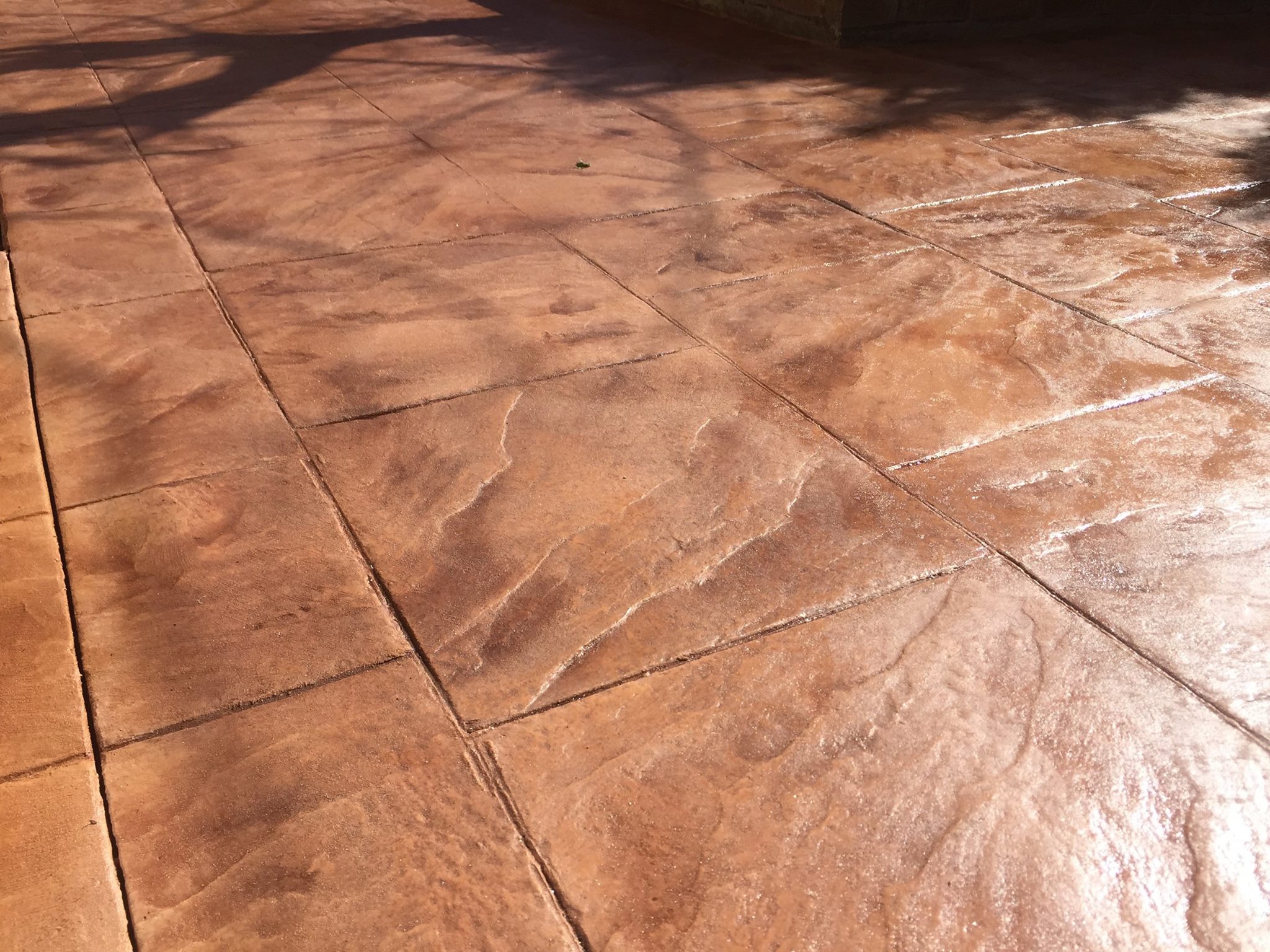
Get the look of natural stone, slate, brick or timber decking at a fraction of the cost and ongoing maintenance of the real material. The finish is only as good as three decisions made before a single stamp touches the slab: the pattern chosen, whether colour comes from integral colour or colour hardener, and how the release agent is used to create depth. Get those right and a stamped driveway or patio can look genuinely convincing for decades.
20+ years installing decorative concrete across the Gold Coast, including work for Gold Coast City Council and local theme parks.
This guide covers pattern and mould options, colour hardener vs integral colour, the stamping and release process, common problems and how to avoid them, slip resistance, the resealing commitment stamped concrete requires, and how it compares to exposed aggregate and plain coloured concrete for Gold Coast conditions.
Is Stamped Concrete the Right Fit for Your Project?
- The look of natural stone, slate, brick or timber without the cost or upkeep of the real material
- A distinctive, high-impact driveway, entry, patio or pool surround
- A finish that suits period, coastal or traditional architecture particularly well
- A budget that allows for resealing every 1 to 3 years as an ongoing cost
- You want the lowest possible long-term maintenance, exposed aggregate or plain coloured concrete generally need resealing less often
- The area gets heavy shade or moss buildup, which shows up more visibly in a textured stamped pattern than a flatter finish
- It’s a high-traffic commercial floor rather than a residential or light-commercial decorative area, where a broom or polished finish is usually more practical
What Is Stamped and Stencilled Concrete?
Stamped concrete is freshly poured concrete pressed with textured mats or mould skins while still workable, imprinting a pattern that mimics stone, brick, cobblestone or timber. Stencilled concrete uses a similar principle with a paper or plastic stencil and a colour hardener to create a paver-style grid or geometric design rather than a deep textured stamp. Both are decorative finishes applied to structurally standard concrete, meaning the base, reinforcement and jointing underneath are exactly the same as any other slab. The finish adds cost and an ongoing resealing commitment, typically every one to three years, but delivers a genuinely premium look for driveways, patios, pool surrounds and entries.
How Stamped Concrete Actually Works
Underneath the pattern, stamped concrete is engineered exactly like plain concrete: the same base preparation, the same reinforcement, the same control joints, and the same curing process. The stamp is the finish, not a shortcut, and a stamped driveway that fails structurally has failed for the same reasons any other driveway does. See our guide to driveway resurfacing vs replacement if you’re assessing an existing stamped surface with cracking or movement rather than choosing a finish for a new pour.
The process itself happens in a narrow window while the concrete is still workable. Colour is worked into the surface, a release agent is applied, and textured mats or skins are pressed into the slab to imprint the pattern before the concrete sets. Timing is critical: stamping too early distorts the pattern as the concrete continues to settle, and stamping too late means the surface has hardened enough that the mats won’t imprint cleanly or may tear the surface.
Pattern and Mould Options
The pattern chosen sets the overall character of the finish, and different patterns suit different areas of a property.
Square and rectangular stone shapes in a staggered layout with defined joint lines. The most versatile pattern, suiting almost any home style from modern to traditional. A strong choice for driveways, entries and patios.
Traditional, tightly laid stone or paver texture with a rounded, old-world character. Reads well on driveways and entry statements, and is one of the most requested patterns for a European street feel.
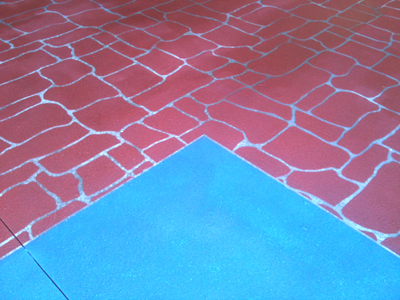
Large, irregular stone shapes with a more rustic, organic joint layout than ashlar. Suits garden paths, pool surrounds and informal outdoor areas where a natural, quarried look is the goal.
Replicates timber decking boards, complete with grain texture, without the ongoing maintenance, splintering or rot risk of real timber near a pool or in coastal conditions.
A structured brick-look pattern suited to traditional or heritage-style homes, entries and pathways where a classic paved look is wanted.
A textured finish with no visible joint lines, giving the impression of a single quarried slab. A clean, contemporary option for modern architecture and minimalist landscaping.
Match the scale of the pattern to the size of the area. A large driveway or plaza can carry a bold pattern like large-format ashlar or cobblestone without looking busy, but the same pattern on a small courtyard or narrow side path can feel cramped and overwhelming. On smaller areas, a finer, tighter pattern or a seamless texture usually reads better.
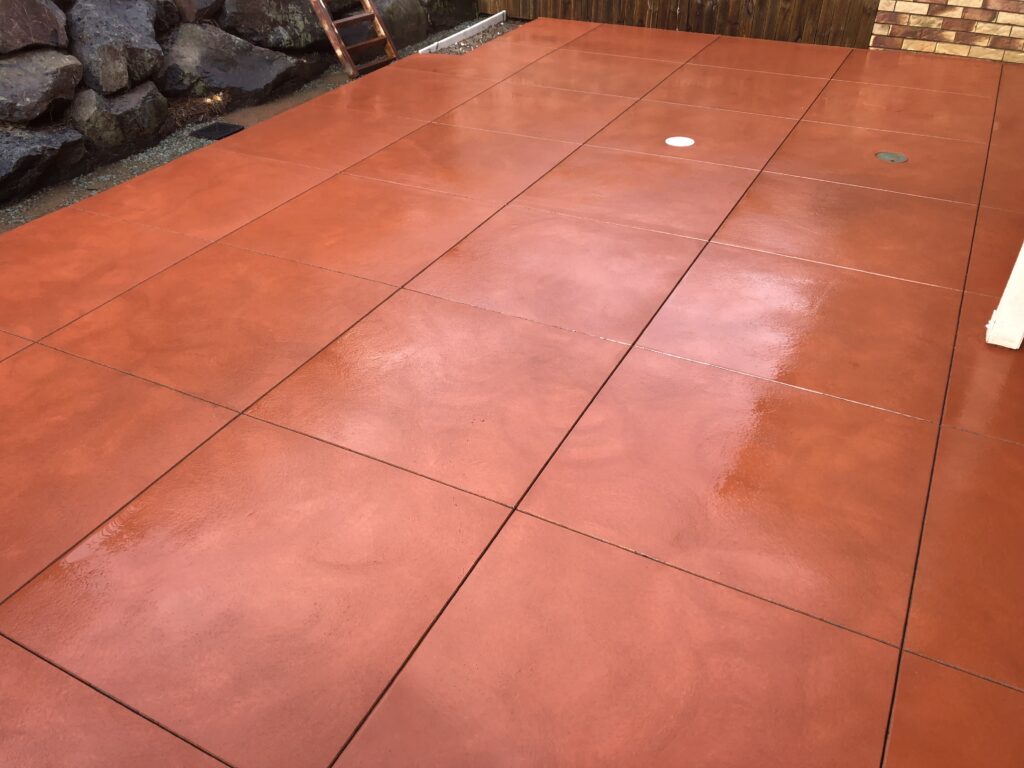
Colour Hardener vs Integral Colour: The Decision That Shapes Everything Else
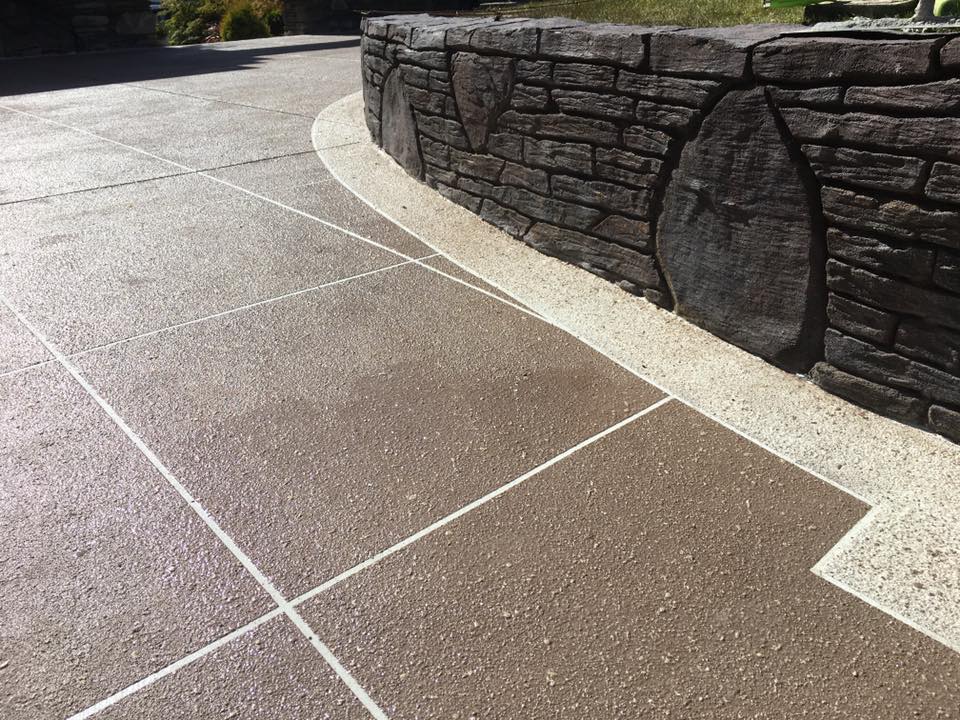
This is the single most consequential technical decision in a stamped concrete project, and it’s rarely explained clearly before a homeowner is asked to choose.
| Property | Integral Colour | Shake-On Colour Hardener |
|---|---|---|
| How it’s applied | Mixed into the concrete at the batch plant, colouring the full depth of the pour | Broadcast onto the surface of the wet concrete and floated in by hand |
| Colour range | Generally more limited, mostly earth tones and pastels | Much broader colour range, including brighter and more saturated tones |
| Depth of colour | Extends through the entire slab; if the surface is chipped or scratched, the colour underneath matches | Concentrated in roughly the top 3 to 5mm of the surface; a deep chip can expose plain grey concrete beneath |
| Surface durability | No change to surface hardness | Densifies and hardens the surface layer, which can improve abrasion and weather resistance |
| Labour | Lower labour, since no hand-broadcasting or floating is required | More labour-intensive, requiring even hand application and floating |
| Typical use case | Often used as a base colour, sometimes combined with a hardener or release for extra depth | The most common choice for exterior stamped work, particularly where colour vibrancy and surface durability both matter |
Why this matters for a Gold Coast driveway specifically: colour hardener’s surface-densifying effect is a genuine practical advantage in a coastal environment with salt-laden air, UV exposure and heavy seasonal rain. Because the colour is concentrated near the surface, a colour hardener finish is also more vulnerable to visibly showing wear over decades of vehicle traffic, which is part of why the resealing schedule discussed below matters more for stamped concrete than for most other finishes.
Release Agents: Where the Realistic Shading Comes From
A single flat colour looks obviously artificial on a stamped surface. The realistic, weathered stone appearance comes from a release agent, a powder or liquid product applied to the surface immediately before stamping.
Release agents serve two purposes at once. First, they act as a bond-breaker, stopping the textured stamping mats from sticking to the wet concrete and disturbing the imprint as they’re lifted away. Second, a pigmented release agent leaves behind a subtle secondary colour in the low points and joint lines of the pattern, creating the antiqued, naturally variegated look that makes a stamped stone pattern read as genuine rather than uniform and flat.
A common professional technique is to start with a lighter base colour (from either integral colour or colour hardener) and apply a noticeably darker release agent over it. Although a large majority of the release agent washes away once the concrete has cured, enough remains pressed into the surface texture to create genuine colour depth and shadow in the joints, exactly the kind of subtle variation seen in real quarried stone.
Common Stamped Concrete Problems and What Actually Causes Them
Most of the complaints we hear about stamped concrete on the Gold Coast trace back to a handful of genuine, well-understood causes, not bad luck. Knowing what to check before a pour, and what to ask a contractor, avoids most of them.
If you’re getting quotes from more than one contractor, ask specifically how they plan to place control joints within the pattern, not just what pattern and colour they offer. A contractor who has a clear, considered answer to that question is far more likely to deliver a stamped surface that doesn’t develop random cracking outside the design lines.
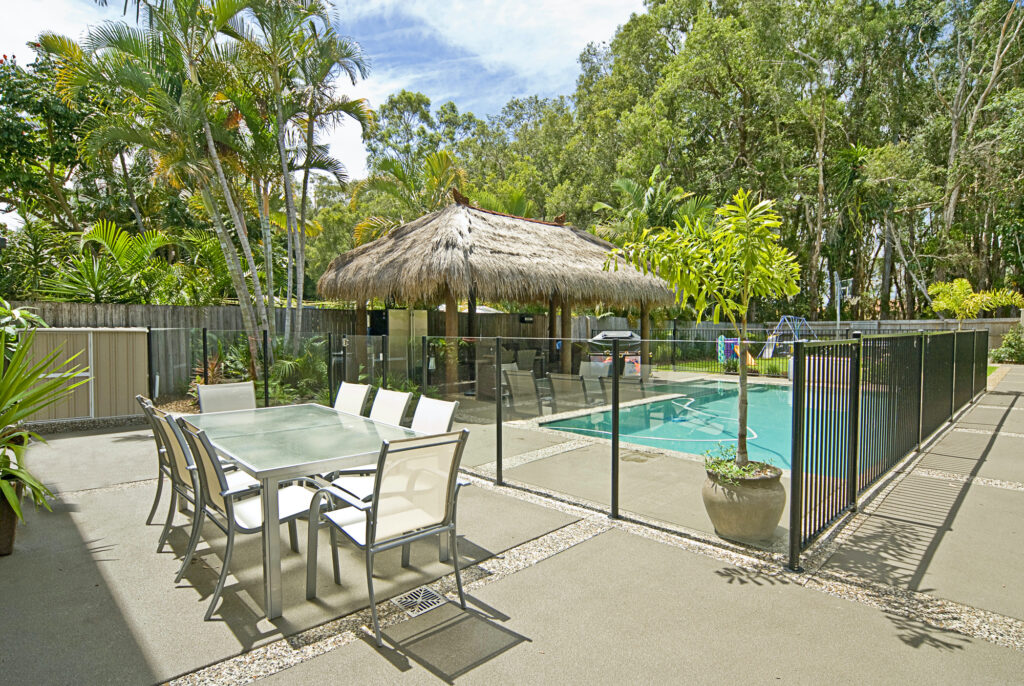
Stencilled Concrete: A Different Technique, A Similar Look
Stencilled concrete achieves a related but distinct result to stamping. Rather than pressing a textured mat into the surface, a paper or plastic stencil is laid over the wet concrete and a colour hardener is broadcast and floated over the top. Once the stencil is removed, it leaves behind clean grout lines in a paver or tile-style grid, with far less surface texture and depth than a true stamped stone pattern.
Stencilled concrete typically suits a flatter, more contemporary paver-look aesthetic, and can be a practical option for areas wanting the visual structure of pavers without the deep texture (and correspondingly higher slip resistance requirements) of a heavily textured stamped stone finish.
Why the same driveway can look completely different from two contractors
Two near-identical driveways, same ashlar slate pattern, same general colour family, can end up looking dramatically different depending on execution. One contractor uses a single flat integral colour with no release agent contrast, resulting in a driveway that reads as an obviously stamped, slightly plastic-looking surface. Another uses a lighter colour hardener base with a genuinely contrasting darker release agent worked properly into the joint lines, producing a surface with real shadow and depth that convincingly reads as natural stone from a normal viewing distance. The mould pattern was identical in both cases. The difference was entirely in the colour and release technique, which is exactly why the contractor’s technique matters as much as the pattern catalogue they can offer.
Slip Resistance and Where to Use Each Pattern
Stamped concrete can become slippery when wet, particularly with a high-gloss sealer, which is a real safety consideration for driveways, ramps and anywhere near a pool. Slip resistance in Australia is classified under AS 4586, Slip Resistance Classification of New Pedestrian Surface Materials, using the Wet Pendulum Test to assign a P-rating.
Heavily textured patterns such as flagstone and rough-cut slate naturally provide more grip than finer, flatter textures like seamless stone or smooth ashlar, simply because there’s more surface texture for a shoe or tyre to grip. For pool surrounds, ramps and sloped driveways, a lower-gloss sealer and a slip-resistant additive mixed into the final coat are both worth specifying regardless of pattern choice. Full detail on sealer types and slip additives is in our guide to resealing a concrete driveway.
The Resealing Commitment
is the typical resealing interval for stamped concrete, shorter than most other decorative finishes because the colour and surface protection sit close to the surface and take the full brunt of UV, traffic and coastal weather directly.
This is worth understanding clearly before choosing stamped concrete over other decorative options: it looks spectacular when freshly sealed, but the colour will visibly dull and the surface will lose some of its protective qualities faster than exposed aggregate or plain coloured concrete if resealing is neglected. Homeowners who want a premium look with a lower long-term maintenance commitment sometimes choose exposed aggregate instead, since its colour comes from stable, UV-resistant stone rather than a surface-applied colour treatment. Both are excellent finishes; the right one depends on how much ongoing maintenance you’re realistically prepared to commit to.
Budget for resealing as an ongoing cost when comparing stamped concrete to other finishes, not just the upfront installation price. A stamped driveway that isn’t resealed on schedule doesn’t just look tired, it can also lose slip resistance and surface protection faster than the colour fade alone suggests, since the sealer is doing real protective work, not just adding gloss.
Stamped Concrete vs Exposed Aggregate vs Plain Coloured Concrete
| Finish | Best suited to | Maintenance | Relative cost |
|---|---|---|---|
| Stamped / stencilled concrete | Feature driveways, entries, patios where a stone, brick or timber look is wanted | Resealing every 1 to 3 years | Higher, more labour-intensive installation |
| Exposed aggregate | Driveways, pathways, pool surrounds, high-traffic areas wanting natural texture and grip | Resealing every 3 to 5 years, colour is stable in the stone itself | Moderate to higher, depending on aggregate choice |
| Plain coloured concrete | Budget-conscious driveways, utility areas, contemporary architectural slabs | Low, colour is integral and doesn’t rely on surface sealer for its base colour | Lower |
See our full comparison of finish types on the concrete finishes hub page, or our guide to exposed aggregate colours if a lower-maintenance textured finish is a better fit for your project.
★★★★★ “The finished job is incredible and exceeded my expectations”
“I feel so lucky to have been recommended OSM for my driveway and surrounds. Cory and his team listened carefully to my vision and made recommendations to make it even better. The finished job is incredible and exceeded my expectations. 100% would recommend OSM.” Jamie Brown, Google review. OSM Concrete holds a 5.0 rating across 74 Google reviews.
Stamped Concrete for Commercial and Civil Projects
Stamped and stencilled finishes aren’t limited to residential driveways. OSM Concrete has applied decorative stamped and coloured finishes across retail plazas, theme park precincts and public-space projects on the Gold Coast, where a stone or paver-look surface needs to withstand continuous foot traffic while still meeting slip resistance and durability requirements. See our commercial concrete and theme parks and public spaces pages for that side of our work.
Stamped & Stencilled Concrete Across the Gold Coast
Pattern and colour choices that suit a driveway well perform differently depending on the local conditions, from coastal salt exposure to sloping blocks to established gardens. Here’s how that plays out across the suburbs we work in most:
Coastal salt exposure and sloping blocks are common. Heavily textured patterns like flagstone or rough slate hold grip better on sloped driveways here than smooth ashlar.
High-rise entries and courtyards favour cleaner, seamless stone or fine ashlar patterns that read well at street level against modern architecture.
A mix of established homes and commercial frontages, where cobblestone and running-bond brick patterns suit older streetscapes while seamless textures suit newer builds.
Established gardens and family homes on this side of the Coast often suit warmer colour hardener tones that hide everyday dirt and garden debris around driveways.
A growing area with newer estates, where large-format ashlar and wood plank patterns suit contemporary builds and larger driveway and alfresco areas.
OSM’s home base. Established properties here often need a stamped surface matched to or replacing an older, worn decorative finish.
Waterfront and canal-front properties where a premium stone-look finish around entertaining areas and pool surrounds is a common request.
A mix of larger rural-residential blocks and newer developments, where longer driveways suit a bolder pattern scaled to the length of the approach.
Established hinterland-adjacent properties, where a fieldstone or flagstone pattern often complements the more natural, garden-heavy landscaping typical of the area.
Larger acreage-style properties where longer driveways and entry statements benefit from a pattern with a strong visual presence from the street.
A mix of established and newer homes near the conservation area, where natural stone tones tend to suit the surrounding bushland setting.
Established southern Gold Coast homes where matching or replacing an existing decorative finish is a common stamped concrete enquiry.
Stamped & Stencilled Concrete FAQs
What’s the difference between stamped and stencilled concrete?
Stamped concrete uses textured mats pressed into wet concrete to create a deep, realistic stone, brick or timber texture. Stencilled concrete uses a paper or plastic stencil with colour hardener to create a flatter, paver-style grid pattern with clean grout lines but far less surface texture.
Is stamped concrete slippery when wet?
It can be, particularly with a high-gloss sealer and finer, flatter patterns. Heavily textured patterns like flagstone provide more natural grip, and a slip-resistant additive can be added to the sealer on any pattern, which is particularly worth specifying for driveways, ramps and pool surrounds.
What’s the difference between colour hardener and integral colour?
Integral colour is mixed into the concrete at the batch plant and colours the entire depth of the slab, but offers a more limited colour range. Colour hardener is broadcast onto the surface and floated in, offering a much wider colour range and a denser, harder surface layer, but the colour is concentrated in the top few millimetres rather than through the full slab.
How often does stamped concrete need resealing?
Typically every 1 to 3 years, shorter than most other decorative finishes, since stamped concrete’s colour and surface protection sit close to the surface and take the full impact of UV, traffic and weather directly.
Is stamped concrete or exposed aggregate better for a Gold Coast driveway?
Both are excellent finishes for different priorities. Stamped concrete gives a distinctive stone, brick or timber look but needs more frequent resealing. Exposed aggregate offers a naturally textured, slip-resistant surface with colour that’s stable in the stone itself, generally requiring less frequent resealing. The right choice depends on the look you want and how much ongoing maintenance you’re prepared to commit to.
Can an old stamped concrete driveway be resurfaced or does it need replacing?
It depends on whether the underlying slab is structurally sound. If the pattern has simply faded or worn smooth but the slab hasn’t moved, resurfacing or resealing can often restore the look. If there’s structural cracking, sinking or movement, replacement is usually the better long-term option. See our guide to driveway resurfacing vs replacement for how to tell the difference.
What stamped concrete patterns suit a modern Gold Coast home?
Large-format ashlar slate, seamless stone textures and clean geometric stencilled grids tend to suit contemporary Gold Coast architecture, while cobblestone, flagstone and wood plank patterns suit more traditional or coastal-rustic styles.
Planning a Stamped or Stencilled Concrete Project?
Send OSM Concrete a few photos of your property and the pattern or look you have in mind, and we’ll talk you through pattern, colour and sealer options that suit the site and how it will actually be used.
Request a Site Assessment20+ years on the Gold Coast · QBCC licensed & fully insured · 5.0★ Google rating from 74 reviews · Preferred contractor to Gold Coast City Council